
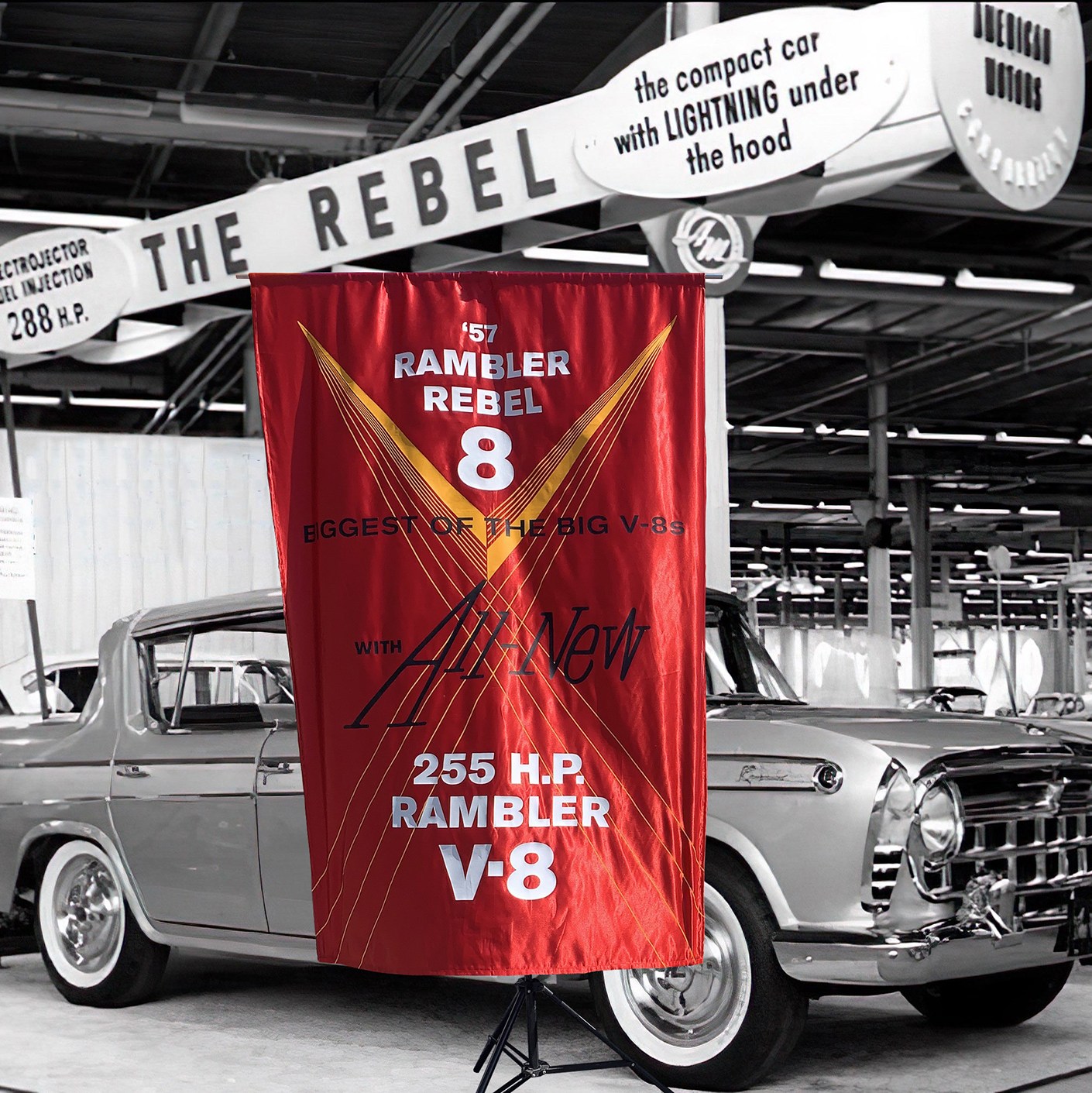
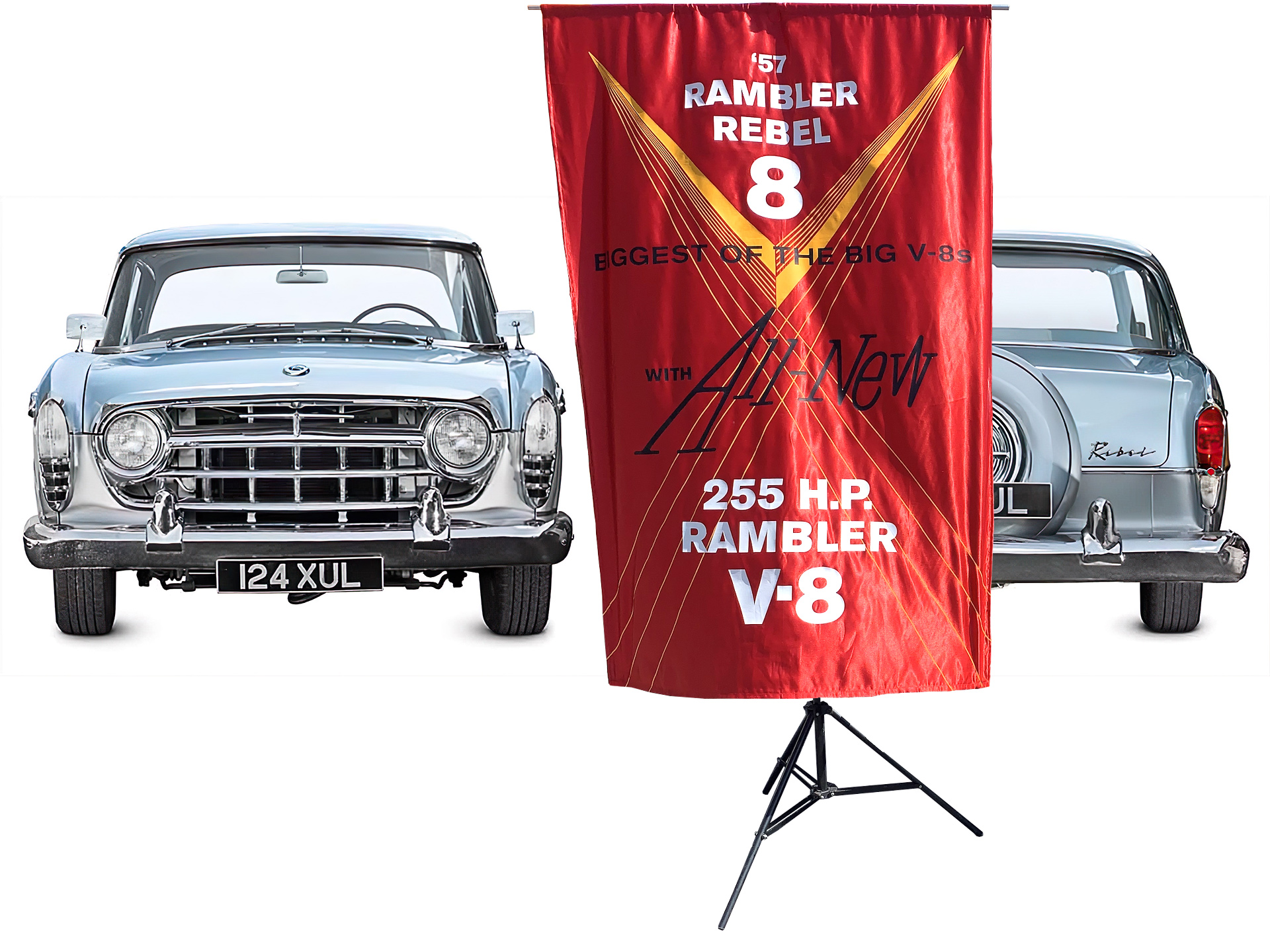
Picture this: it’s 1957, and the American automotive landscape is a parade of chrome and tail fins—cars flexing their excess like peacocks in Detroit showrooms. Then, rolling out of the chaos, comes the 1957 Rambler Rebel. Not a conformist, not a follower, but a four-door rebel with a metallic silver streak and a secret under the hood. My friend, a car nut with grease under his nails and a gleam in his eye, is restoring one of these rare beauties right now. And me? I’m the design guy who got roped into re-creating an American Motors dealership banner from that very year—a bold, period-perfect piece to match his labour of love.
But why go to all this trouble for a car most folks don’t know they’ve forgotten?
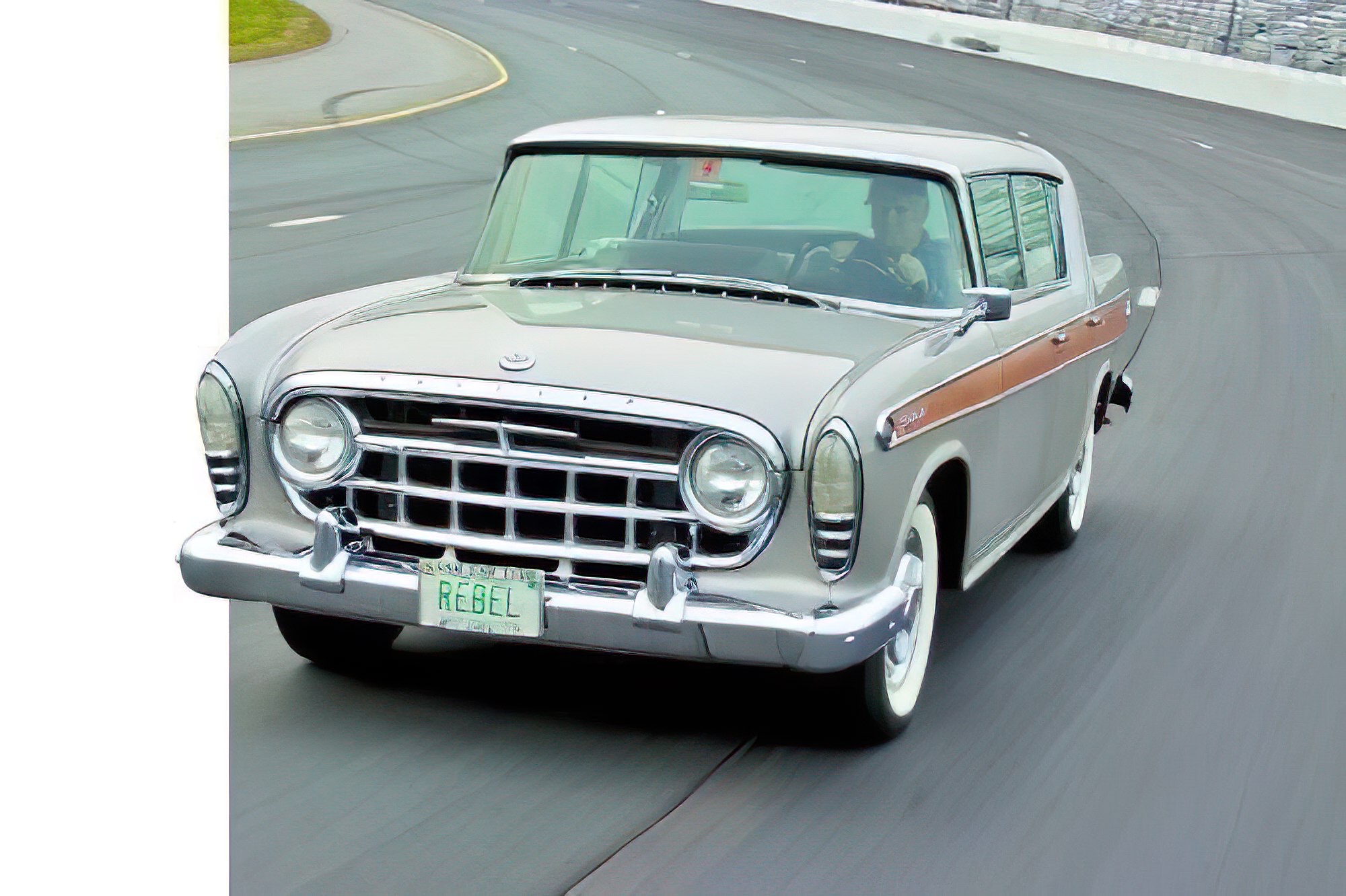
Let me tell you a story about the Rebel that explains it all.
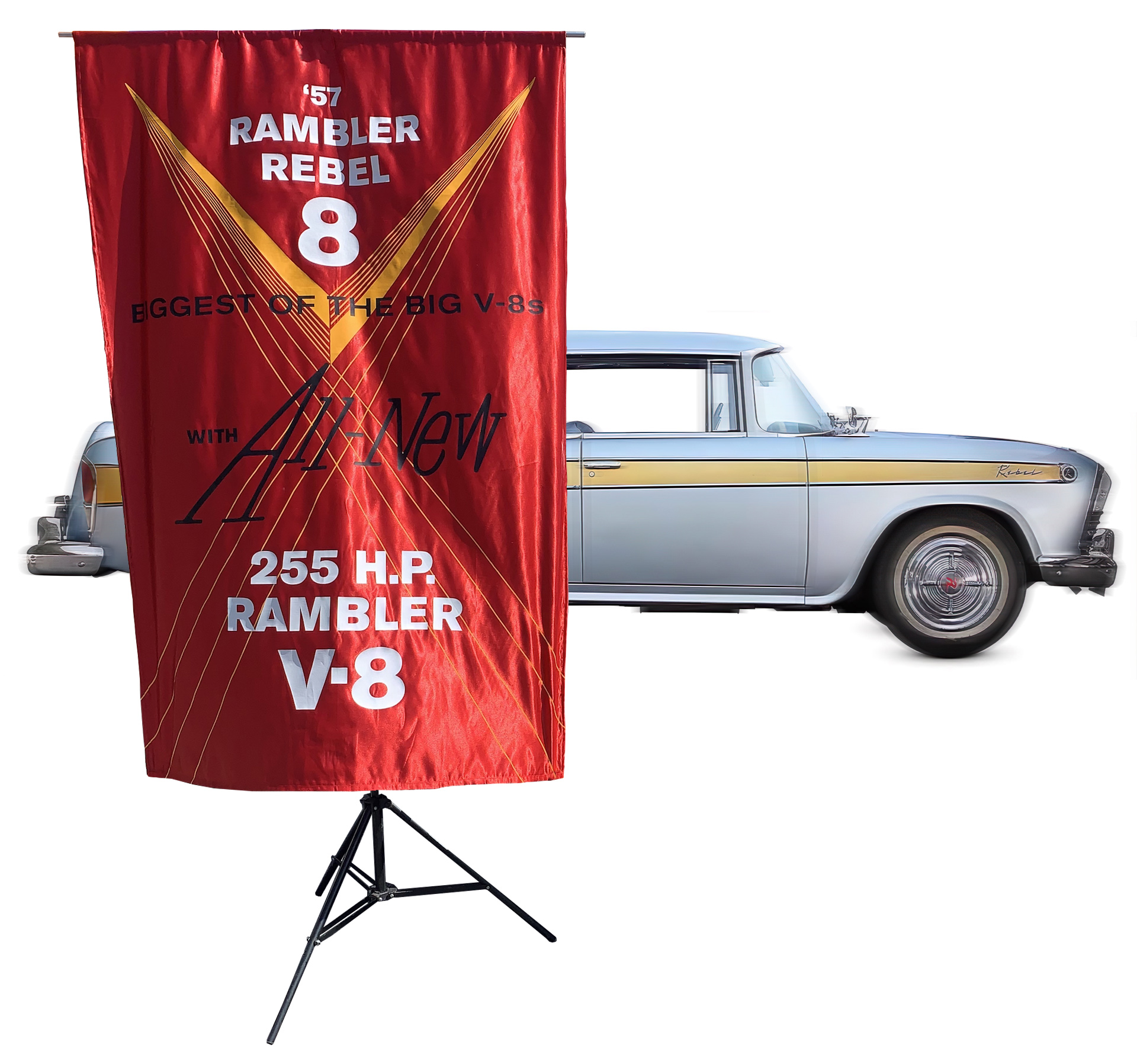
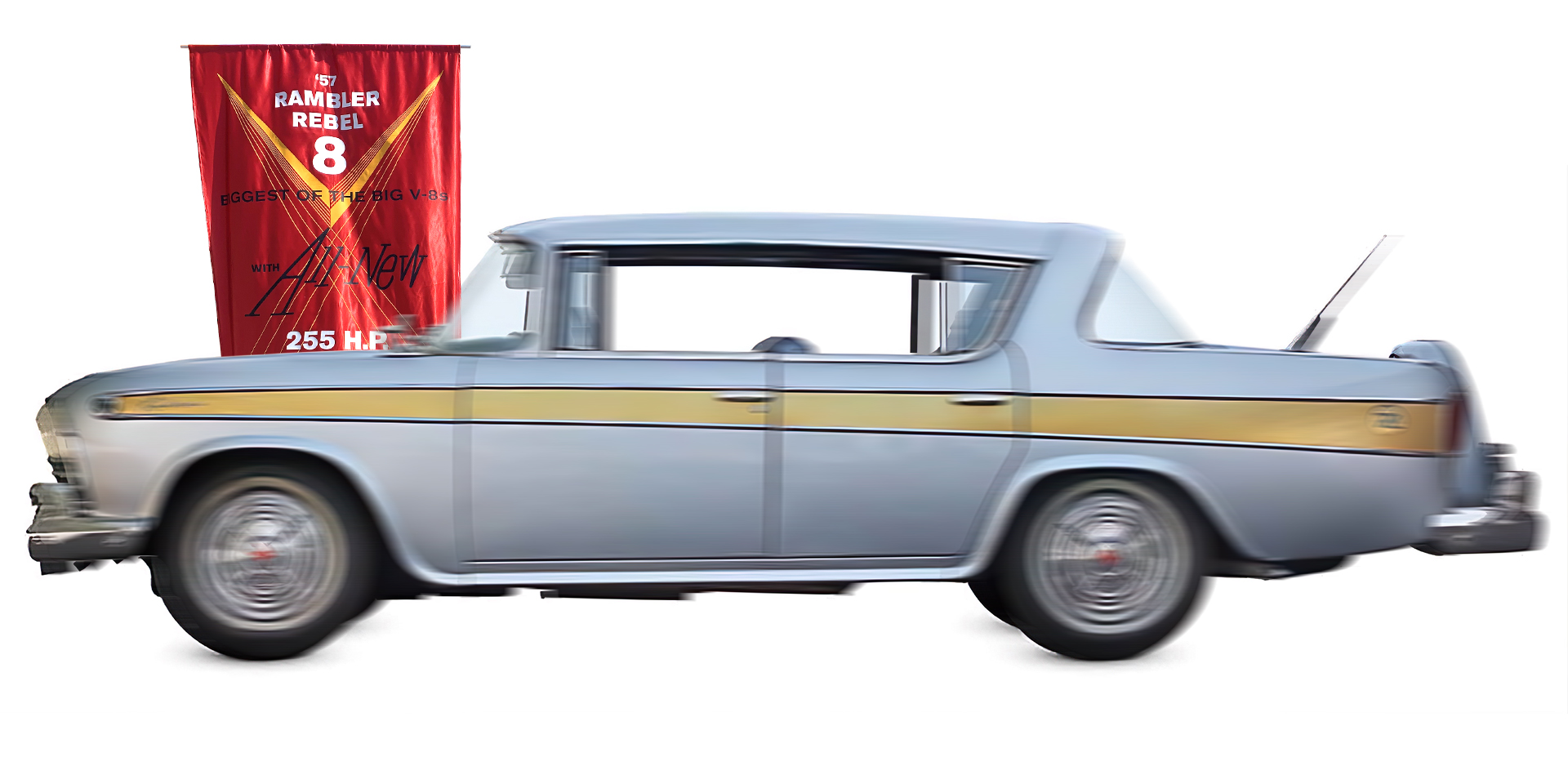
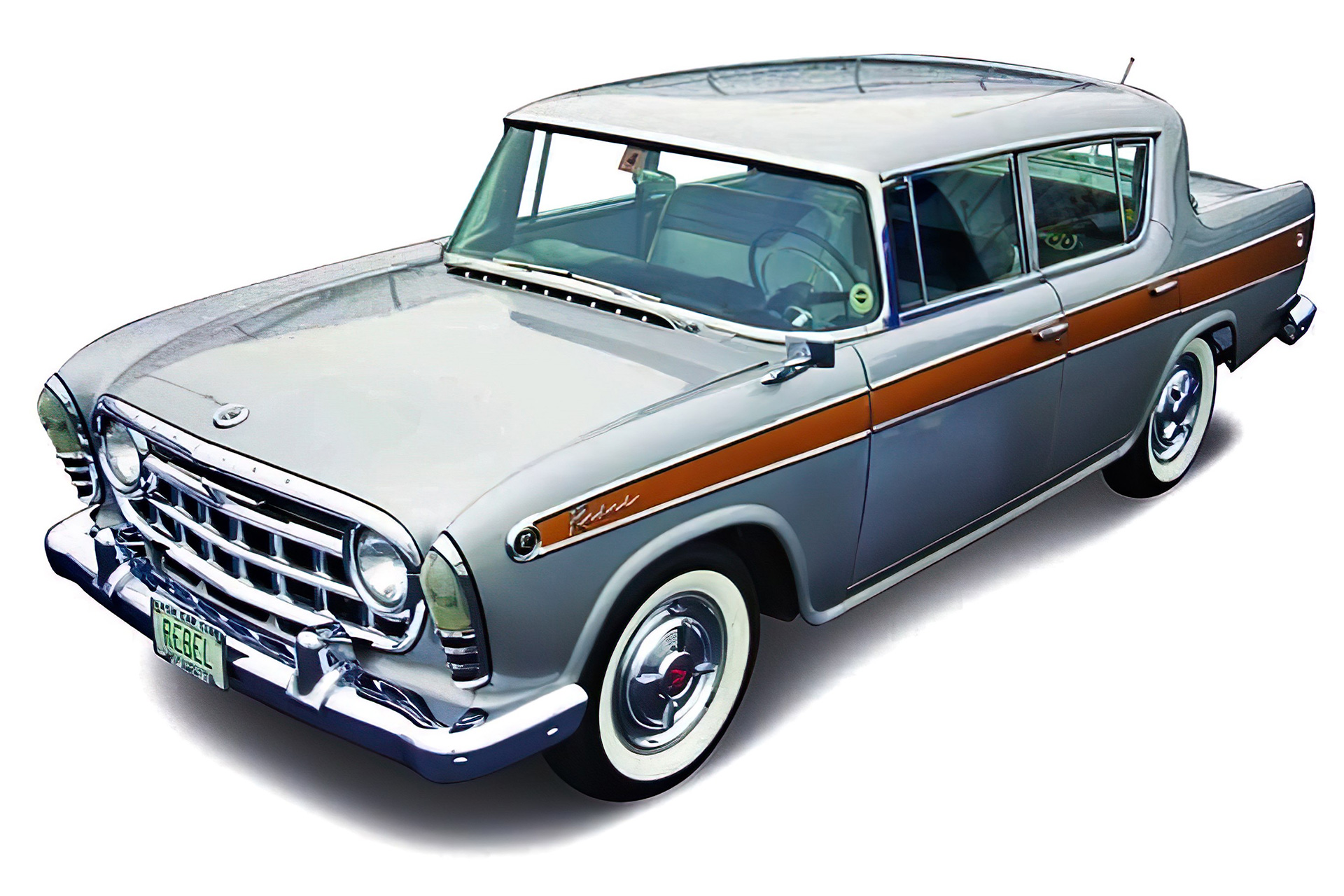
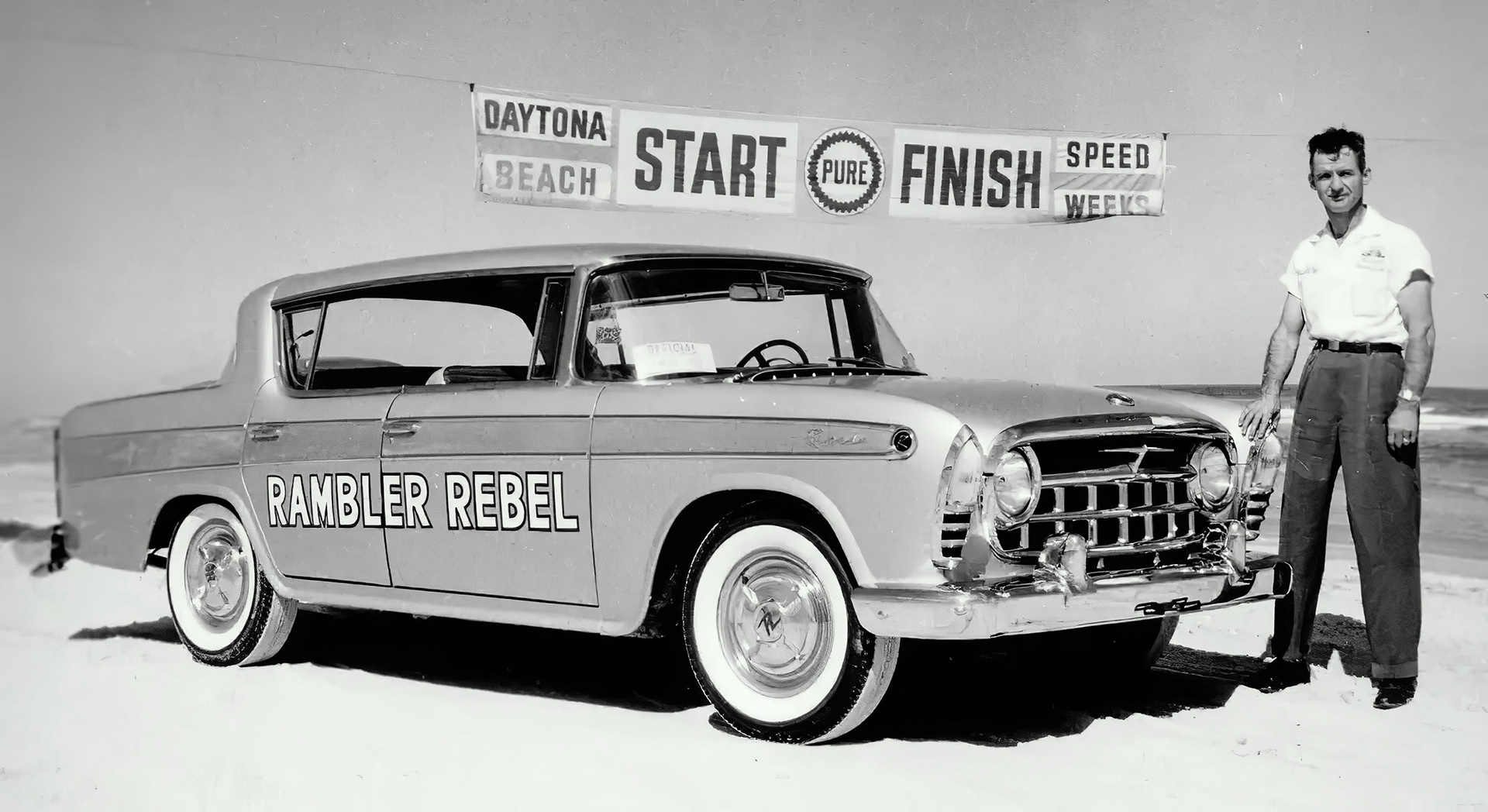
Then there’s the performance angle. Under that unassuming hood sits a 327-cubic-inch V-8 pumping out 255 horsepower and a tire-shredding 345 lb-ft of torque. In 1957, this lightweight four-door clocked the fastest 0-60 time of any American sedan—7.5 seconds flat at the Daytona Beach Speed Week, edging out legends like the Chrysler 300C. Muscle car buffs might scoff, but the Rebel was a sleeper pioneer, a midsize bruiser hiding its punch in plain sight. AMC even beefed up the suspension and unibody to handle the power, making it a road warrior disguised as a family hauler.
My friend doesn’t dwell on such things but my eyes lit up when I learned about that duality—how this “economy car” was able to smoke the competition at Daytona. Thereafter Rambler Rebel afficianados like to say that the ‘57 Rebel was America’s first muscle car. With that in mind, and given they’re very rare now too, I understand it’s not just a restoration; it’s a resurrection of a forgotten badass.
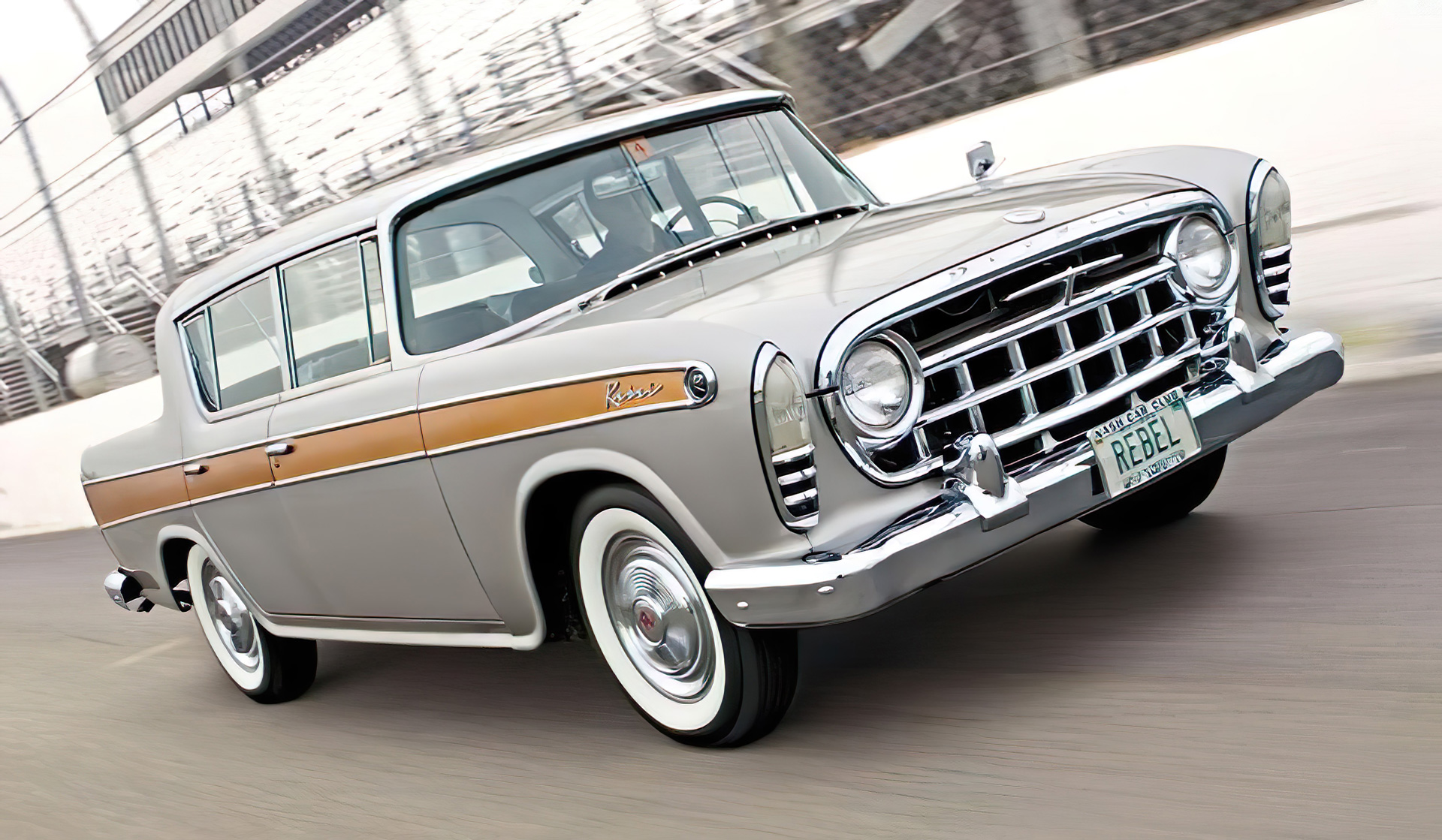
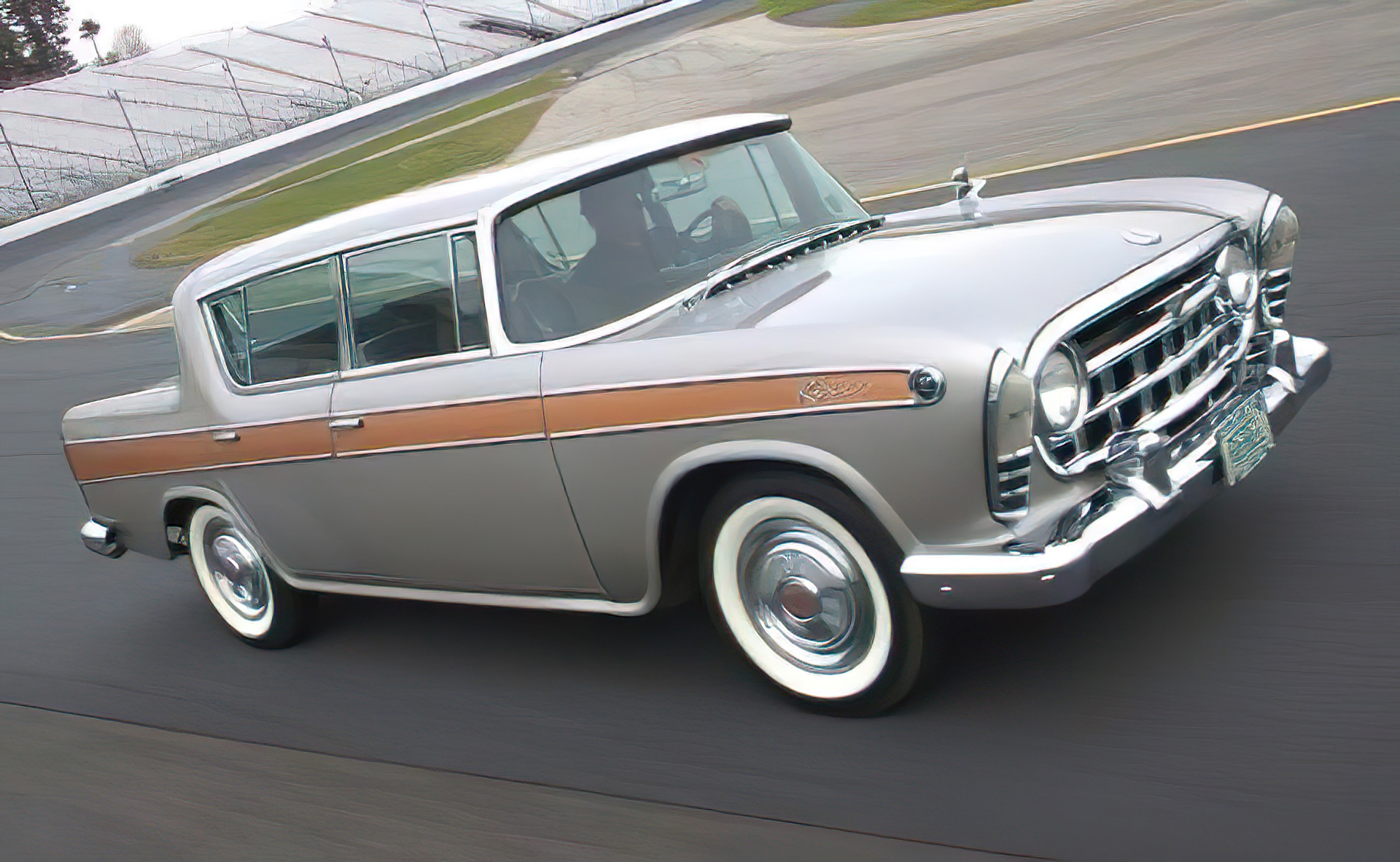
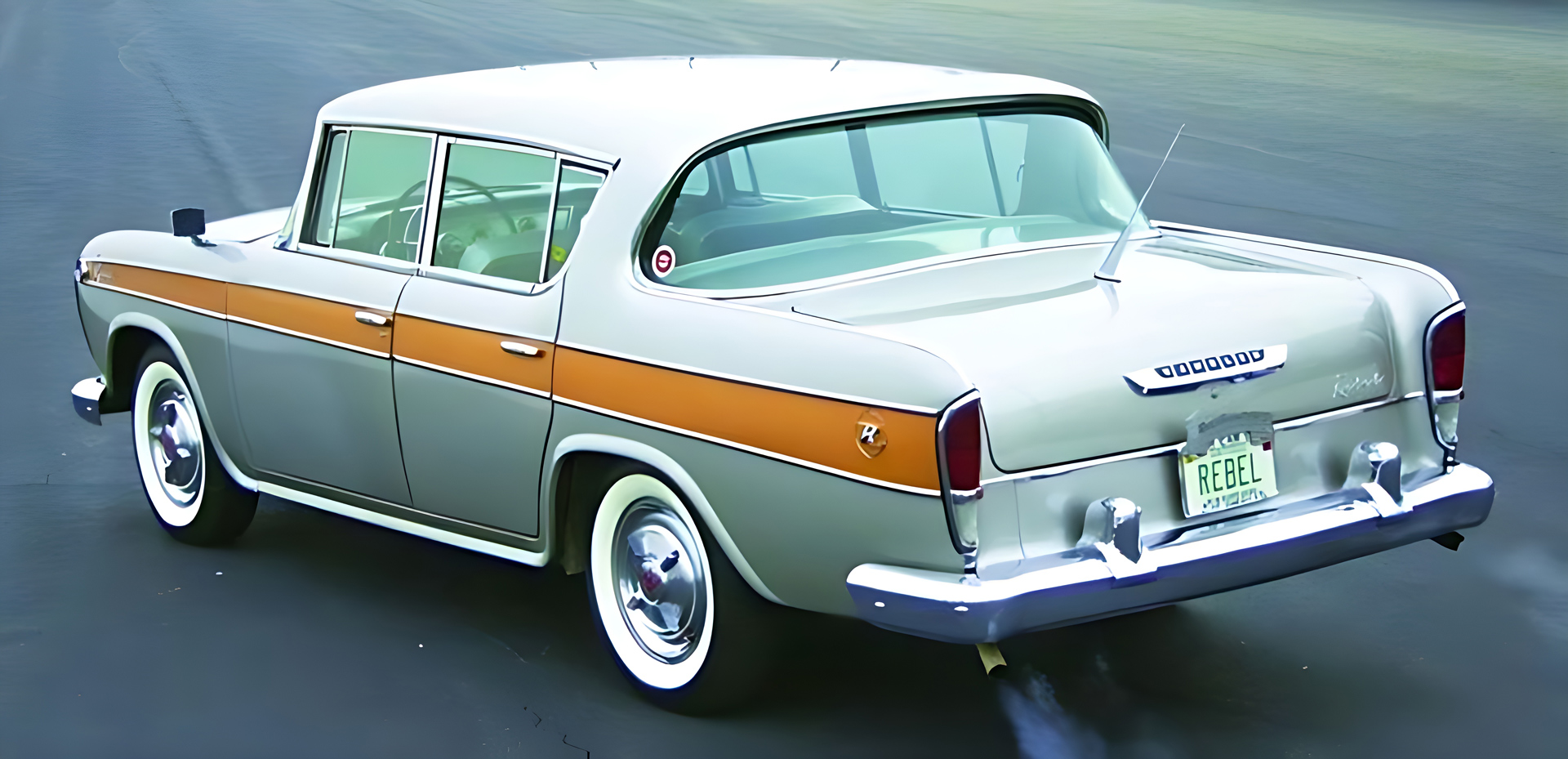
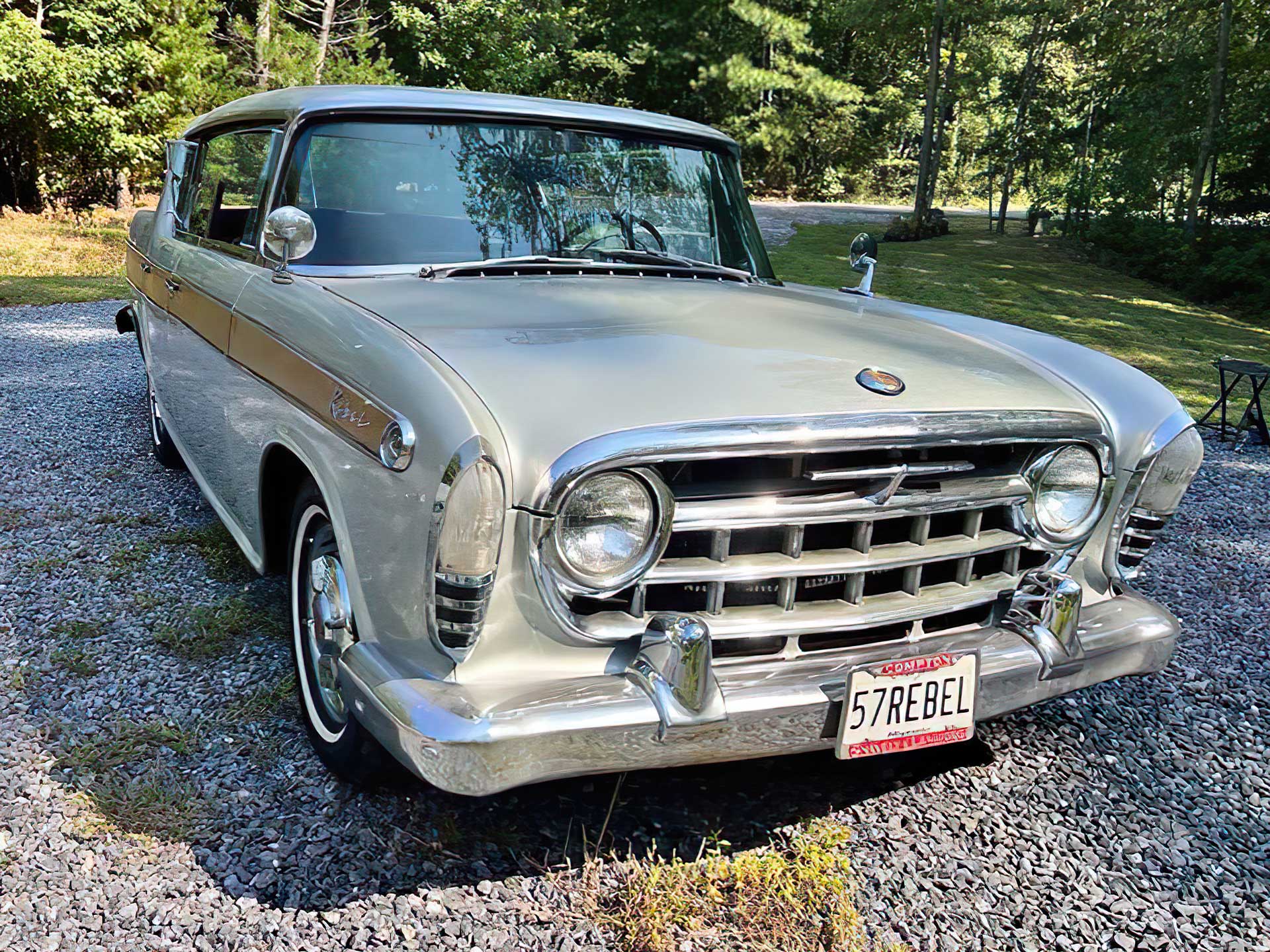
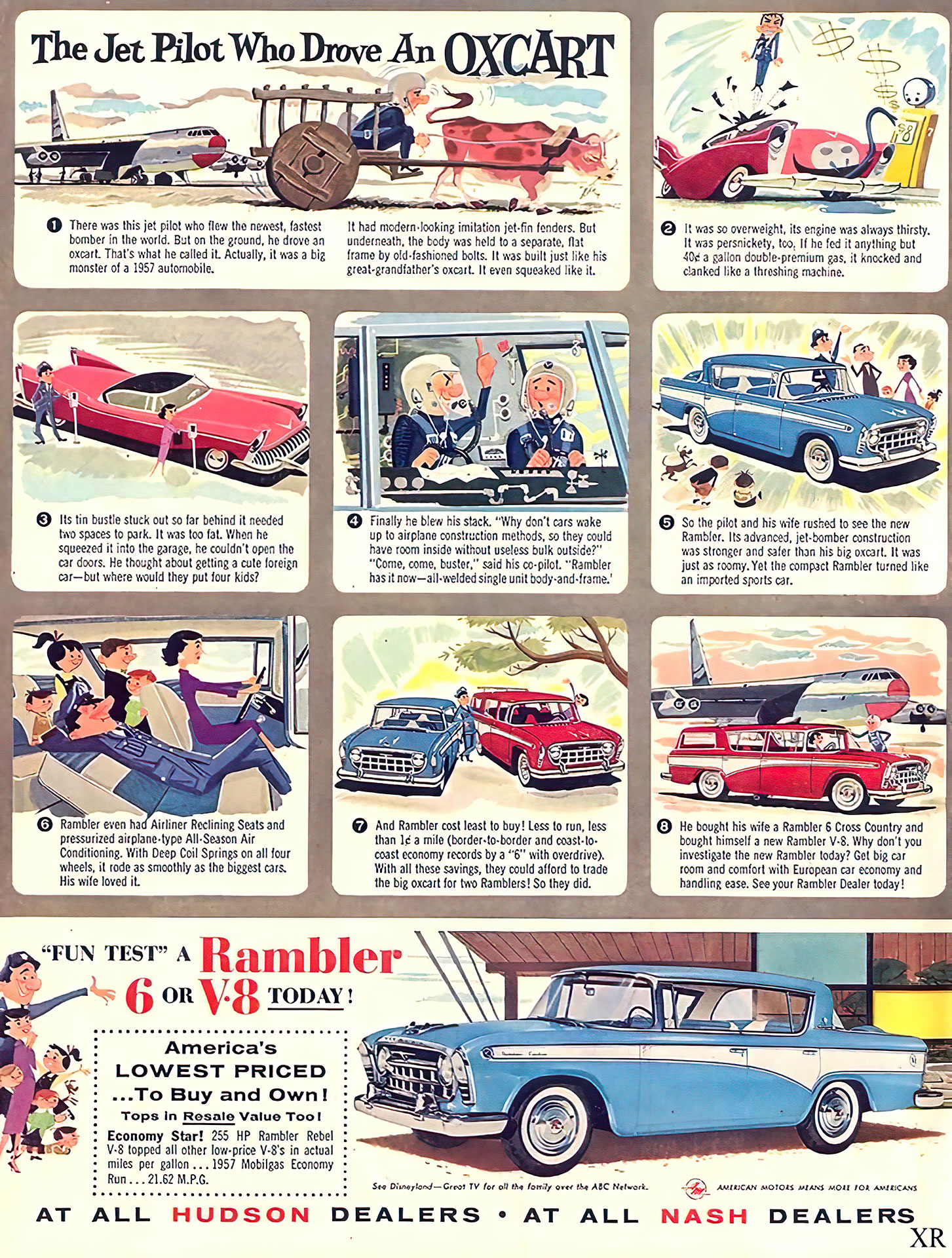
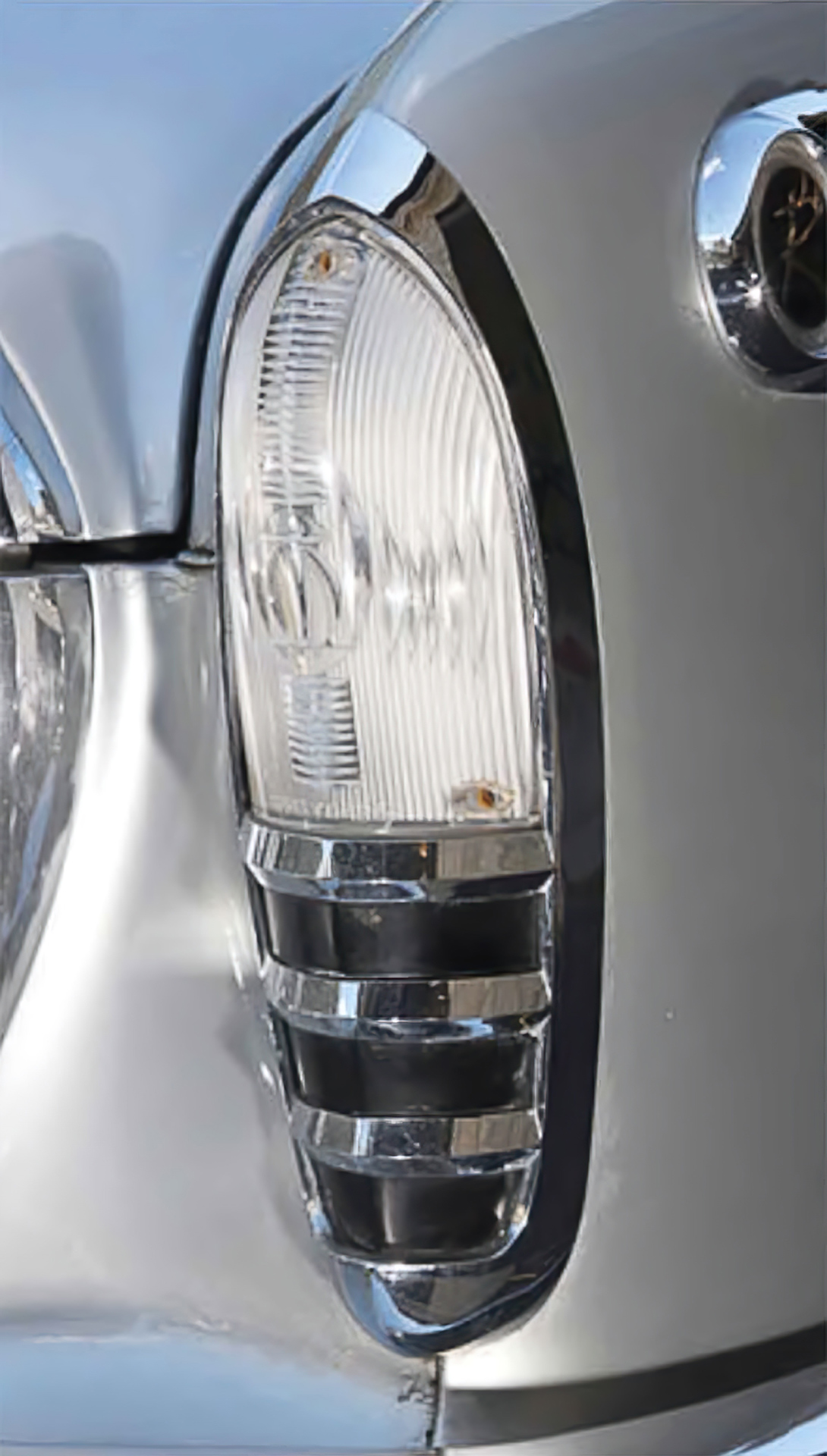
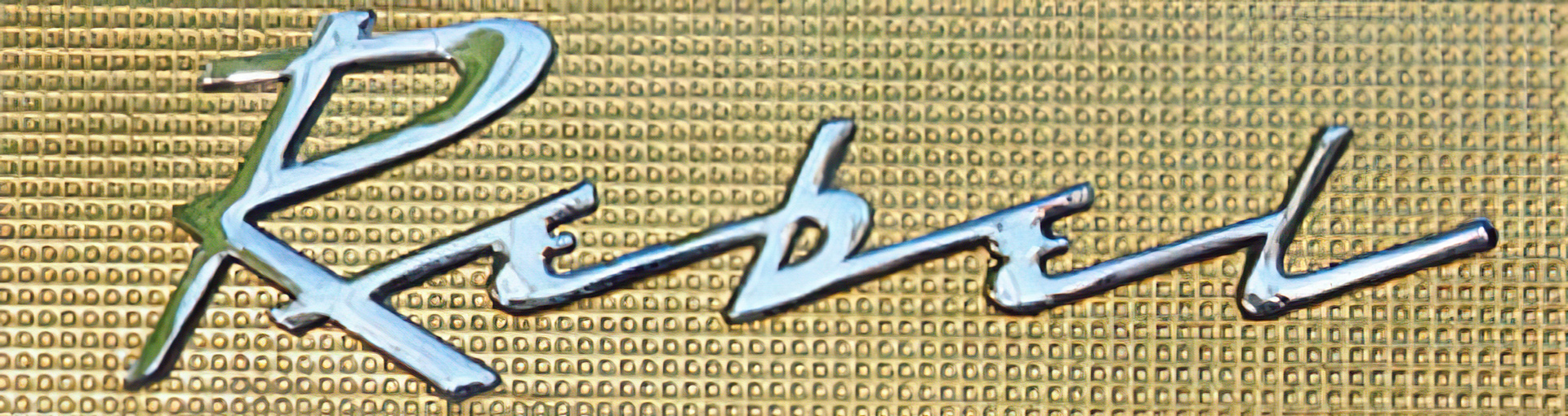
But the Rebel’s story isn’t all horsepower and swagger—it’s personal, too. AMC was on the ropes in ’57, a scrappy underdog fighting to survive. The Rebel was their hail-Mary pass, a limited-run halo car (just 1,500 made) meant to prove they weren’t done yet. Named “Rebel” with its exclusive silver paint and gold-anodised aluminium trim, it was a middle finger to the Detroit big three.
My friend gets that. He’s not a trust-fund gearhead with a garage full of Corvettes—he’s a regular bloke pouring his heart into making an old car new again that mirrors his own grit. Recreating that dealership banner to complement the car isn’t just about aesthetics or nostalgia; it’s about honouring the Rebel’s defiant spirit, the same spirit driving his late-night spanner sessions.
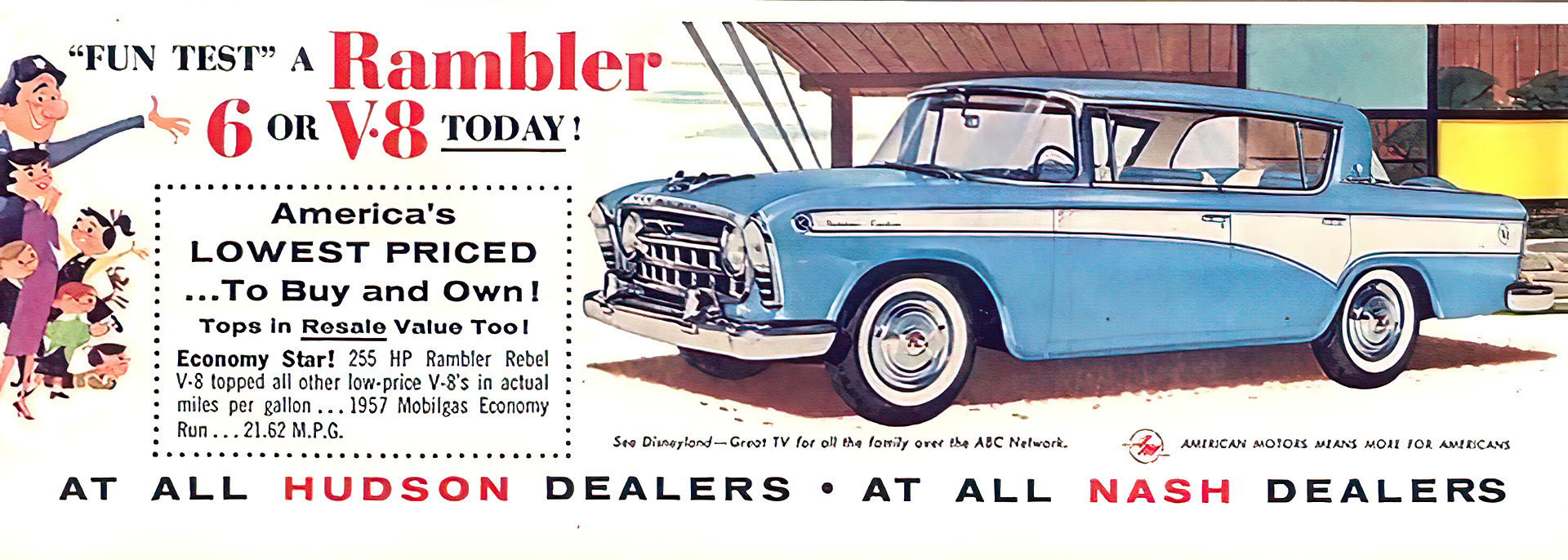
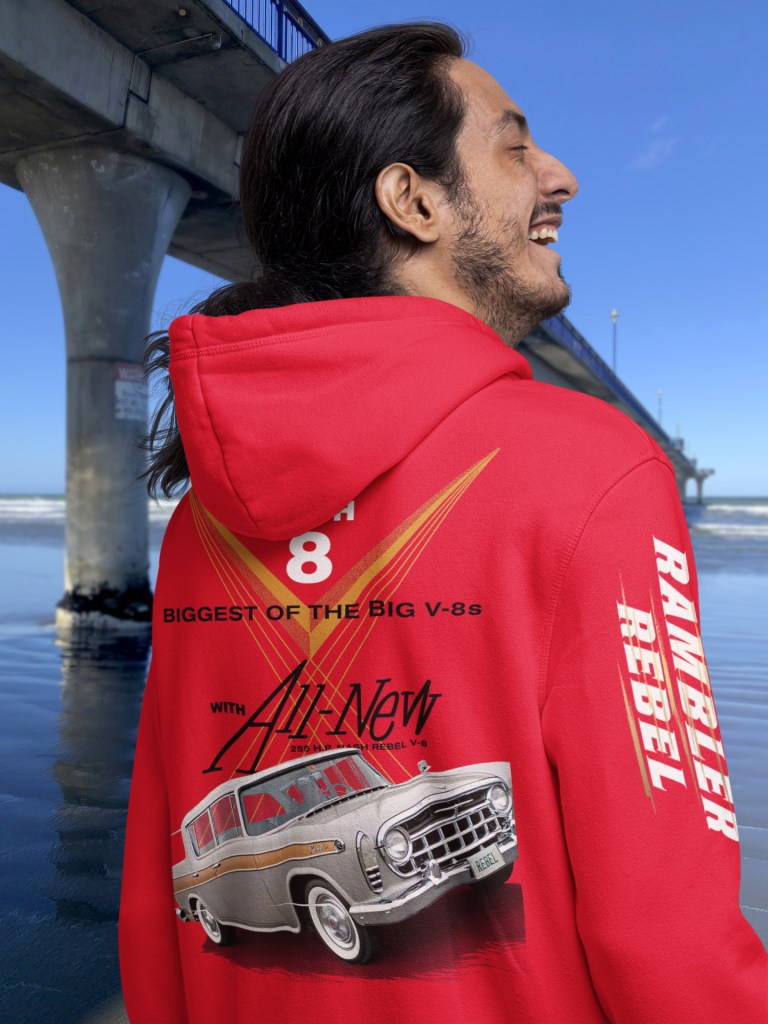
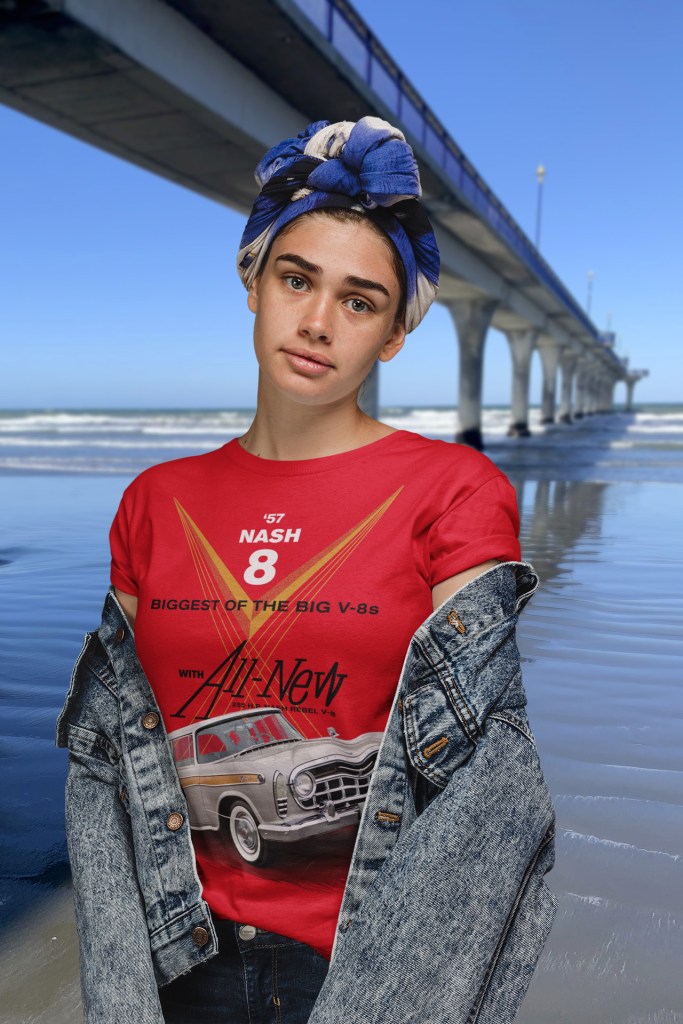
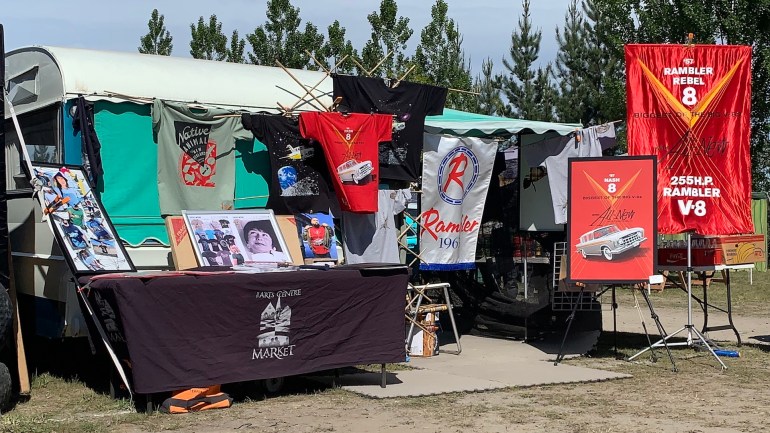
So why the banner? Because it’s the cherry on top. Back in ’57, a dealership banner would’ve hung proud, proclaiming the Rebel’s arrival to a skeptical world. Today, it’s a time machine—a way to frame his restored ride in its original glory. I’ve dug into vintage ads and publicity shots, soaking up the bold fonts, the metallic sheen, the promise of something new. Recreating it meant channeling that vibe into every line and curve, then stitching it into a photocomposite with a ’57 publicity photo of the car. It’s not just a design project—it’s a tribute to why this car matters, to him and to history.
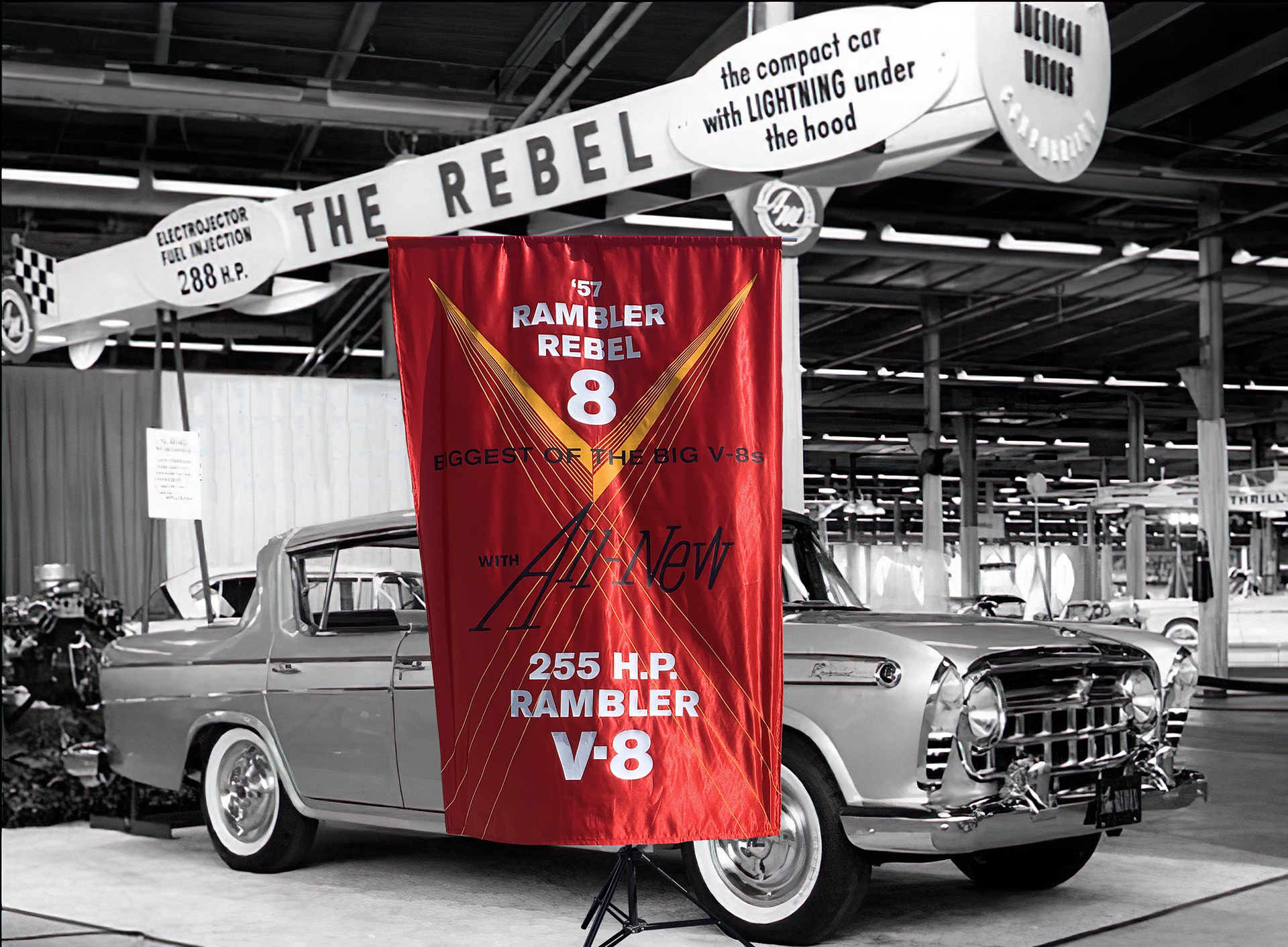
The 1957 Rambler Rebel isn’t a household name like a Mustang or a Charger, and that’s the point. It’s a quirky, gutsy gem for those who see beyond the obvious. My friend’s restoration is about keeping that legacy alive, and my banner is the flag he’ll fly when it’s done. Stay tuned—I’ll walk you through the design process next, with plenty of ’57 Rambler ads and that photocomposite to prove this rebel still has a cause worth fighting for.
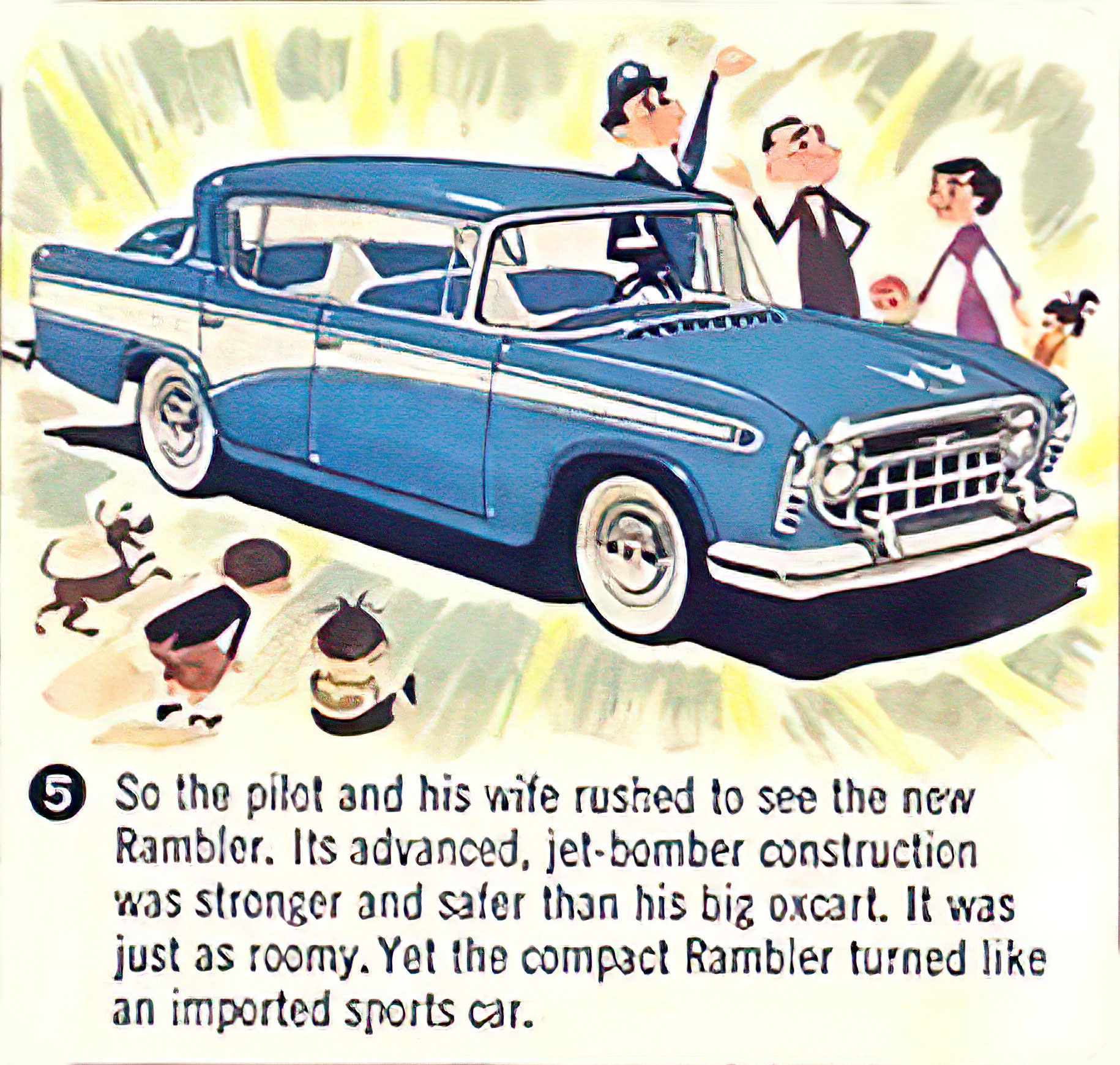
Methodology: Recreating the 1957 Nash Rambler Silk Banner
The original vintage banner, crafted in 1967, was screen-printed using plastisol inks in three colors onto luxurious polyester silk, a technique that delivered bold, durable graphics emblematic of mid-century automotive promotion. To emulate this classic look with modern technology, I opted for solid-color vinyls heat-pressed onto polyester silk, offering a close aesthetic match with enhanced longevity. The process, executed after the vinyl colors are plotter-cut, unfolds in four meticulous steps:
Laying the Foundation: Measuring the Vintage Banner
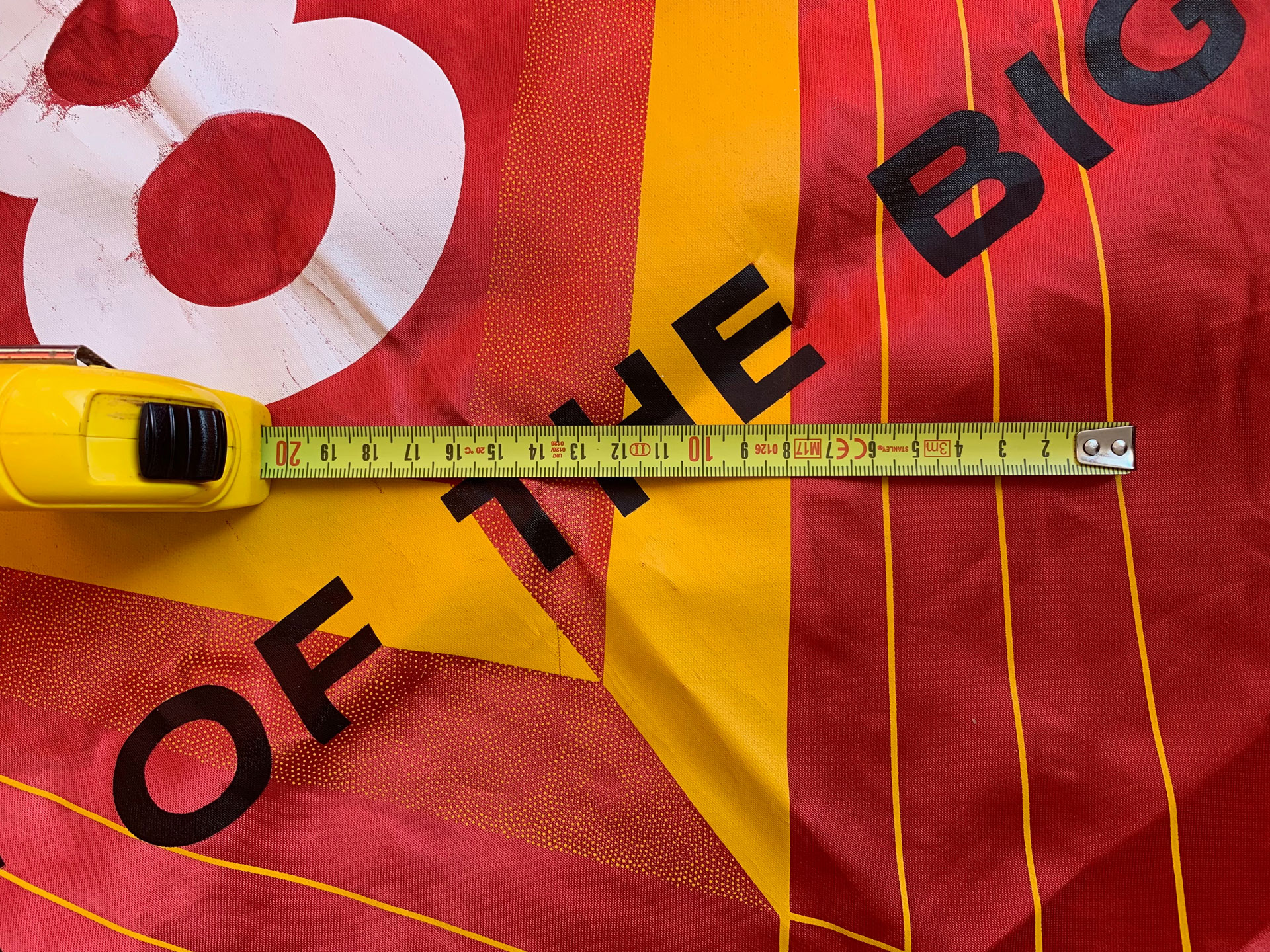
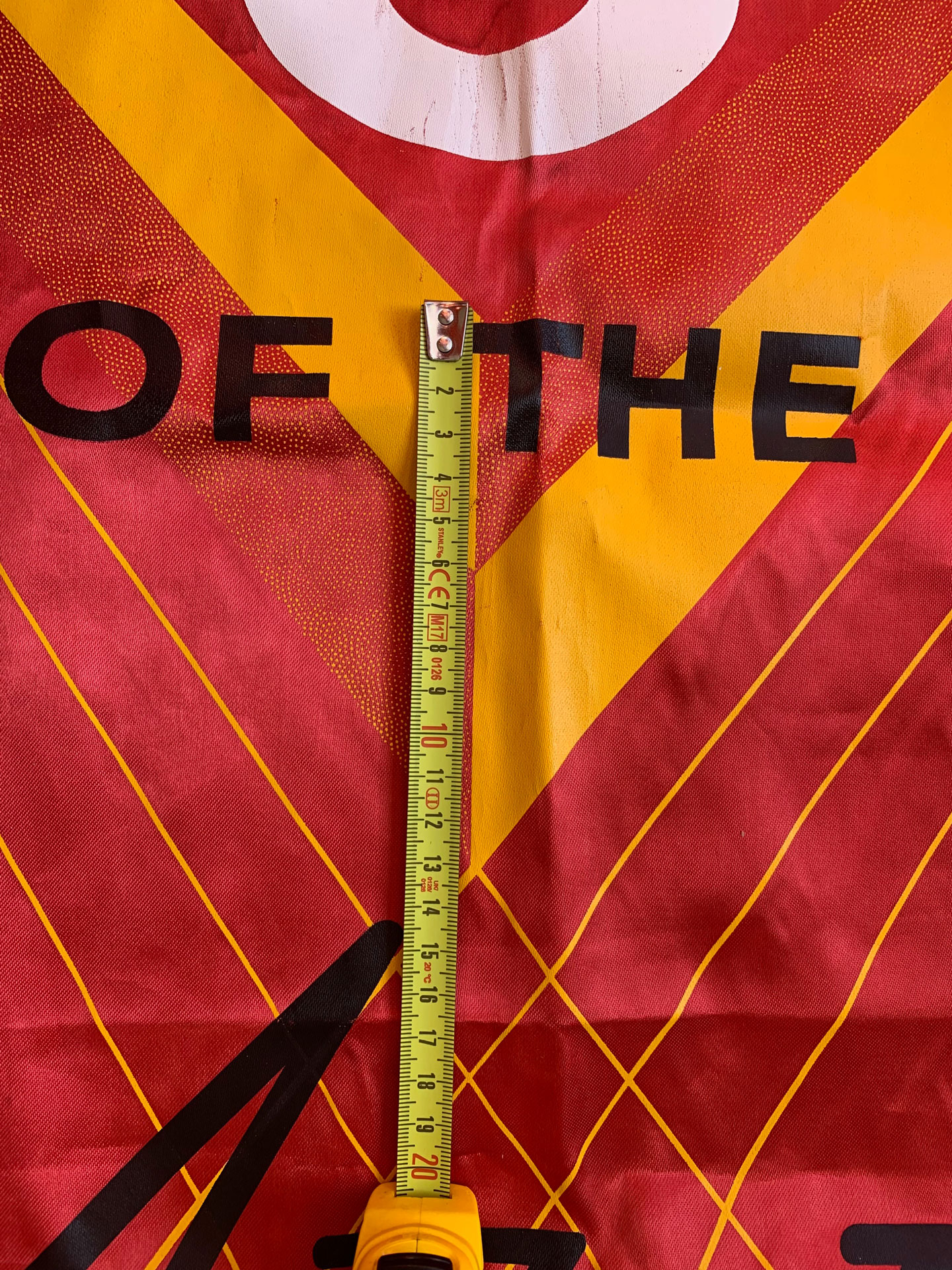
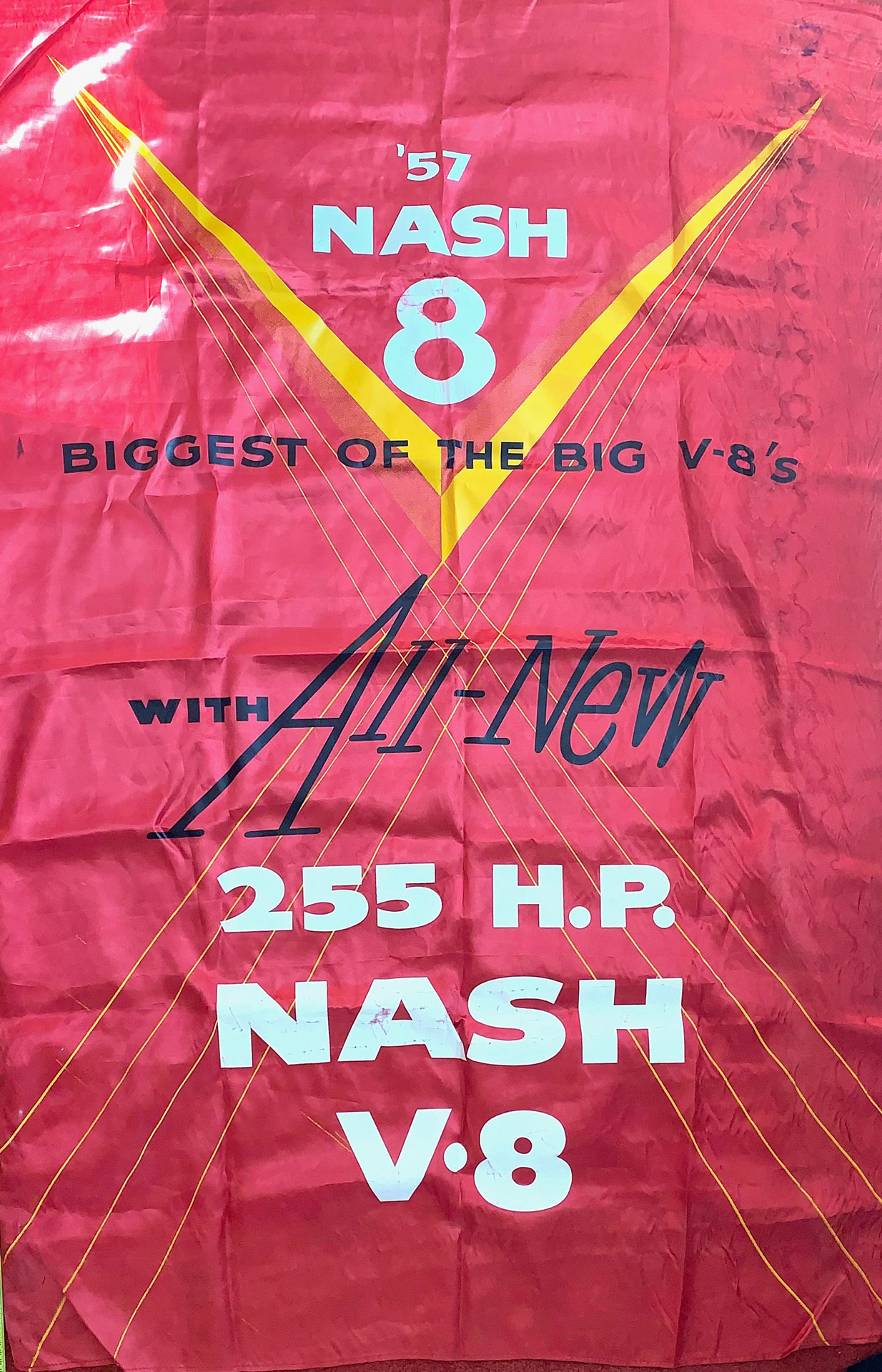
The first step in recreating the 1957 Nash Rambler silk banner involved a thorough measurement process to capture the precise dimensions and layout of my friend’s 70-year-old original. Using a tape measure, I carefully documented every element of the banner’s design—its 39-inch by 60-inch overall size, the proportions of the bold “Rambler” lettering, and the spacing of the decorative elements. These specifications were then used to draw vector artwork at size in Freehand, ensuring every detail matched the original’s fit and finish. Once completed, I exported the files to my print provider, Frame‘n’Copy in New Brighton, setting the stage for the banner’s modern recreation while preserving its vintage authenticity.
The Four Steps of the Heatpressing Method
- Weeding the Vinyl: The initial step involves carefully weeding out excess vinyl from the plotter-cut design, removing unwanted material to isolate the intended graphics. This ensures clean edges and prevents adhesive residue during pressing.
- Precise Positioning: Next, the weeded vinyl is accurately positioned onto the polyester silk using alignment tools or a lightbox to match the original banner’s layout. Proper placement is critical to replicate the vintage design’s proportions and symmetry.
- Initial Heat Press and Peel: The vinyl is then heat-pressed at approximately 150°C (300°F) with medium pressure for 10 seconds, followed by an immediate peel of the mylar substrate. This step activates the adhesive and sets the initial bond, revealing the vibrant colors.
- Final Cure Heat Press: A second heat press at the same temperature and pressure for 10 seconds completes the cure, ensuring the vinyl adheres fully to the silk, enhancing durability and resisting peeling or fading over time.
This refined methodology leverages the heat-press technology’s precision and the polyester silk’s compatibility with vinyl, bridging traditional screen-printing artistry with contemporary craftsmanship to revive the 1957 Nash Rambler banner’s historic charm.
 MagentaDot Brands