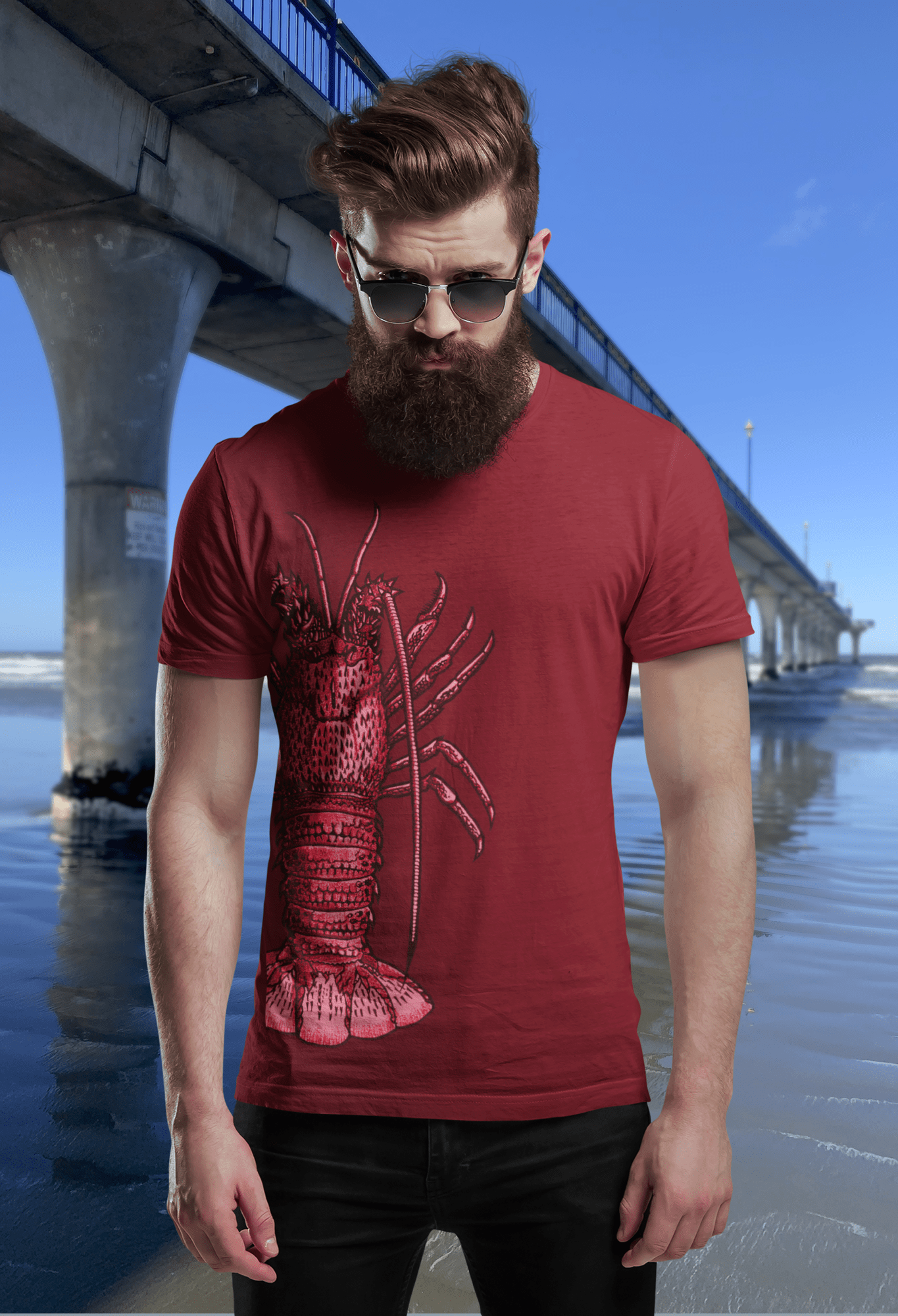
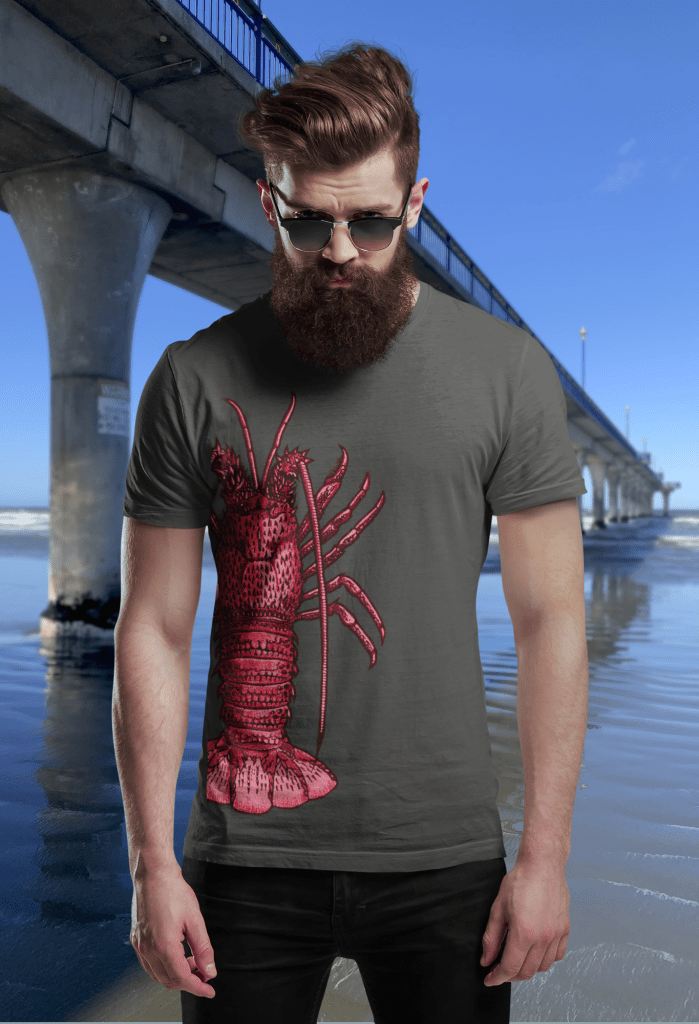
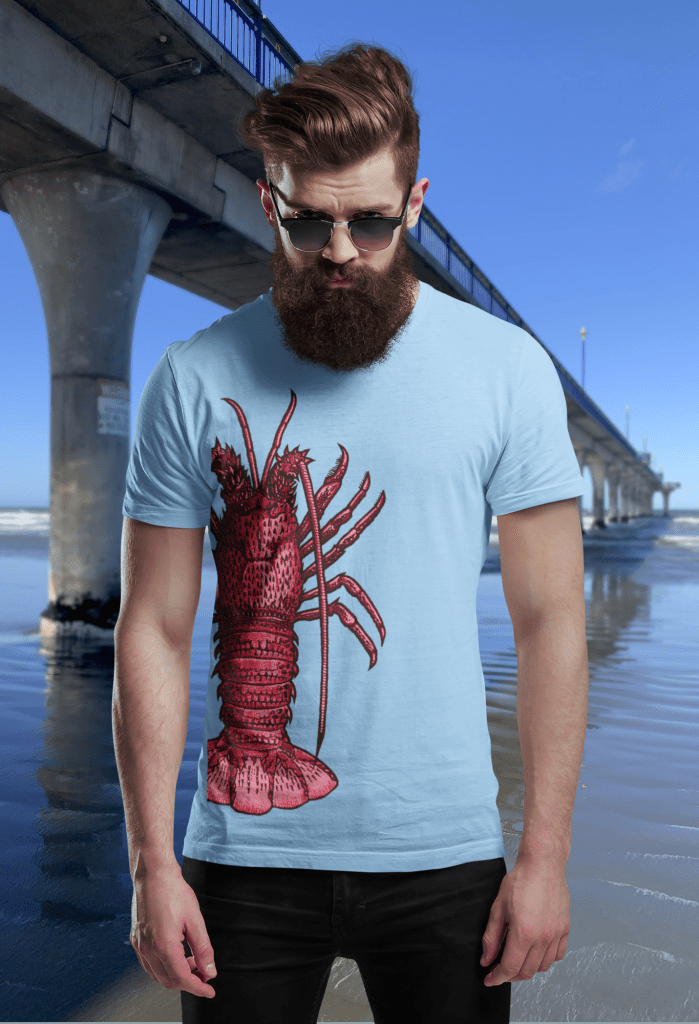
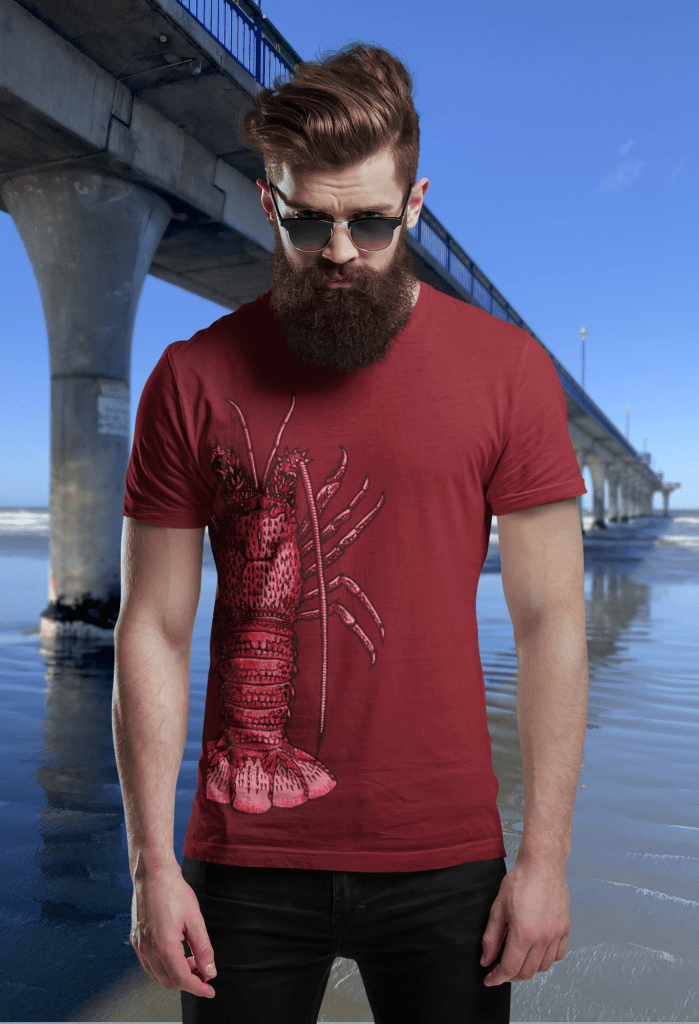
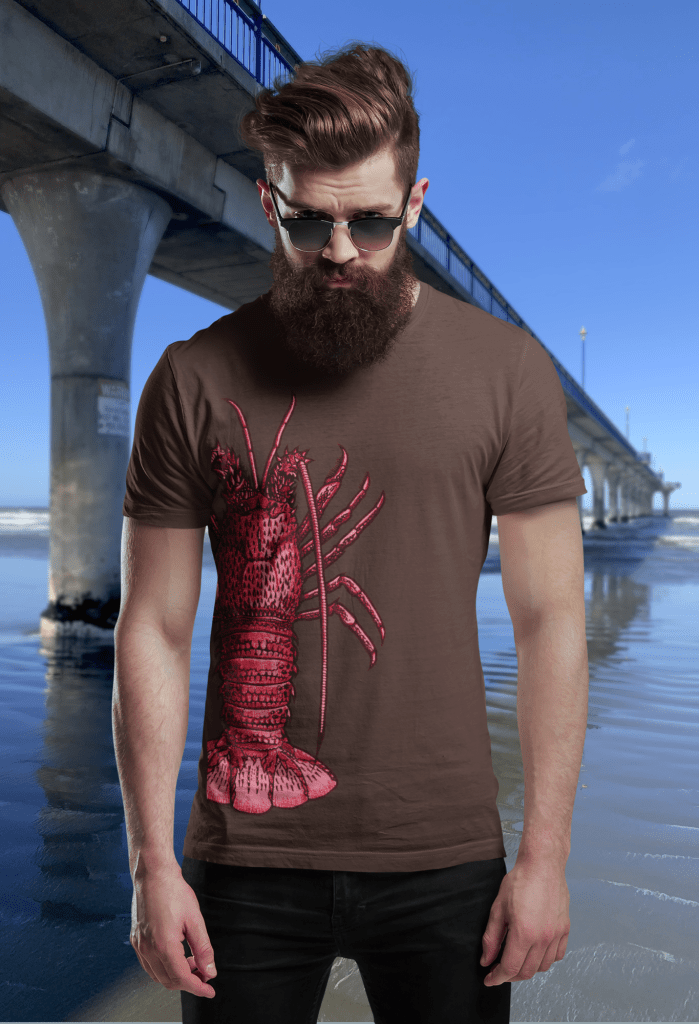
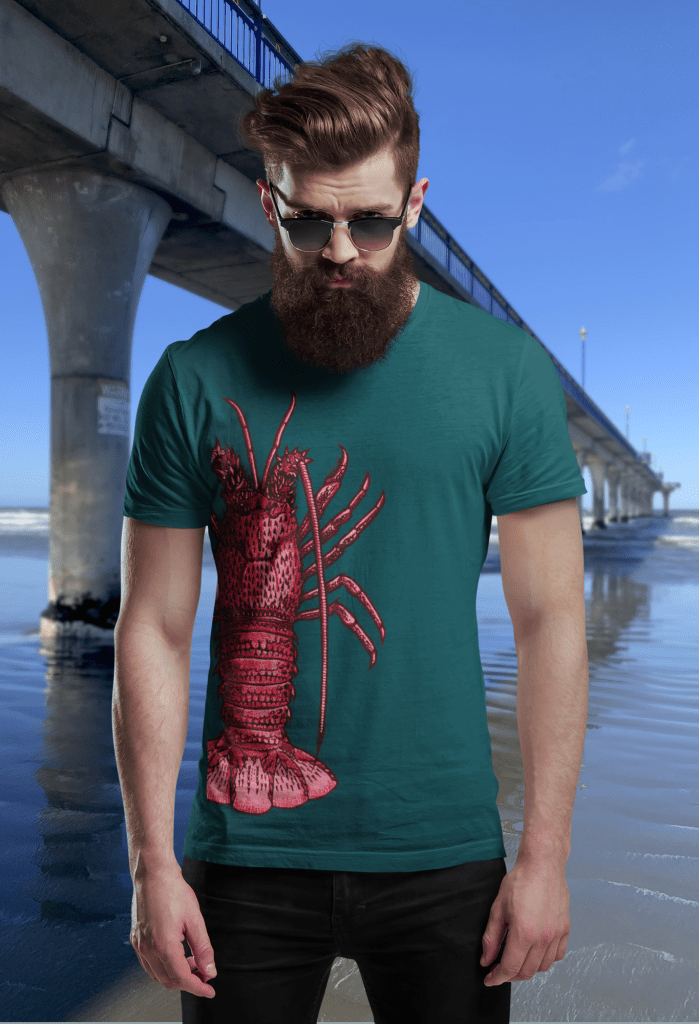
Introducing ‘Kaikoura Cray’, my new charcoal and pen-and-ink drawing of the mighty koura emerging from the surge and shadows of Kaikoura’s rugged rocky shores.
The latest in my local New Zealand native wildlife series, available now on pure cotton tees in five beautiful coastal colours that perfectly showcase the bold red crayfish artwork.
On the back, a subtle badge print between the shoulders reads: “Crayfish – Koura, Kaikoura New Zealand”.
Introducing ‘Kaikoura Cray’, my new charcoal and pen-and-ink drawing of the mighty koura emerging from the surge and shadows of Kaikoura’s rugged rocky shores. The latest in my local New Zealand native wildlife series, available now on pure cotton tees in five beautiful coastal colours that perfectly showcase the bold red crayfish artwork.Dark grey T-shirt.Pale blue T-shirt.Cardinal red T-shirt.Chestnut brown T-shirt.Atlantic dark blue-green T-shirt.
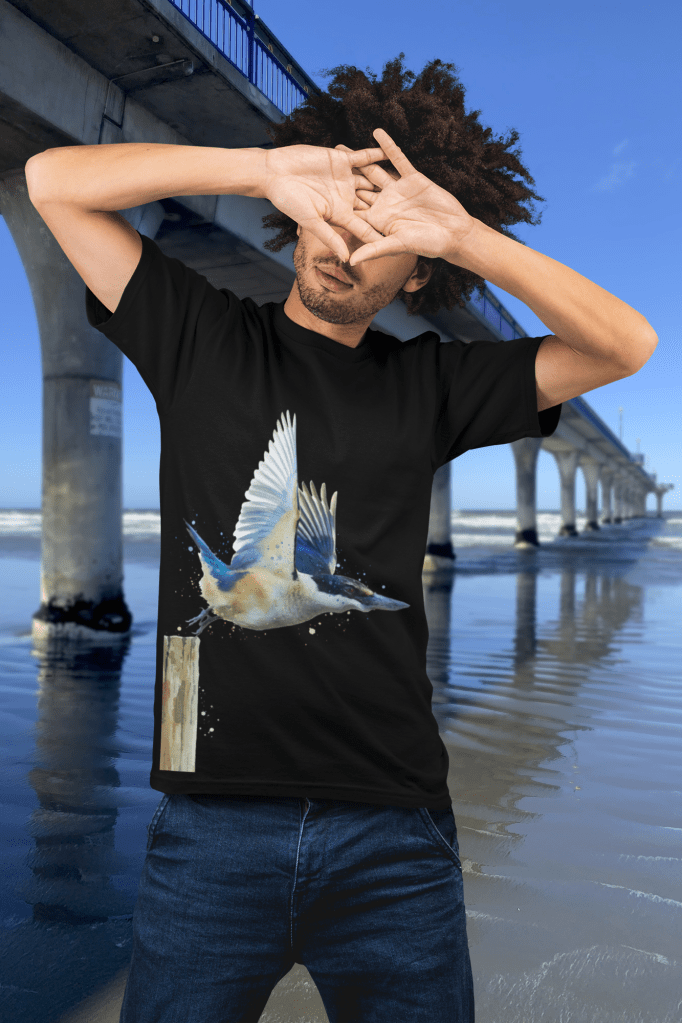
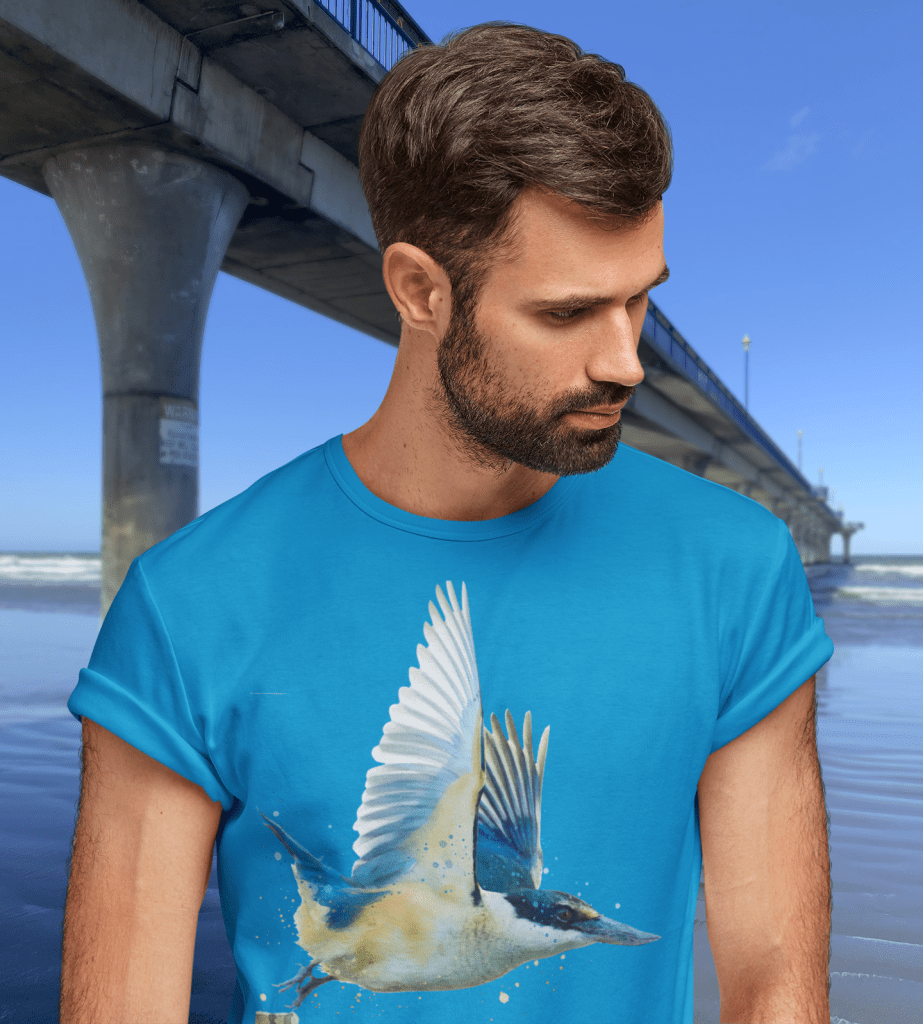
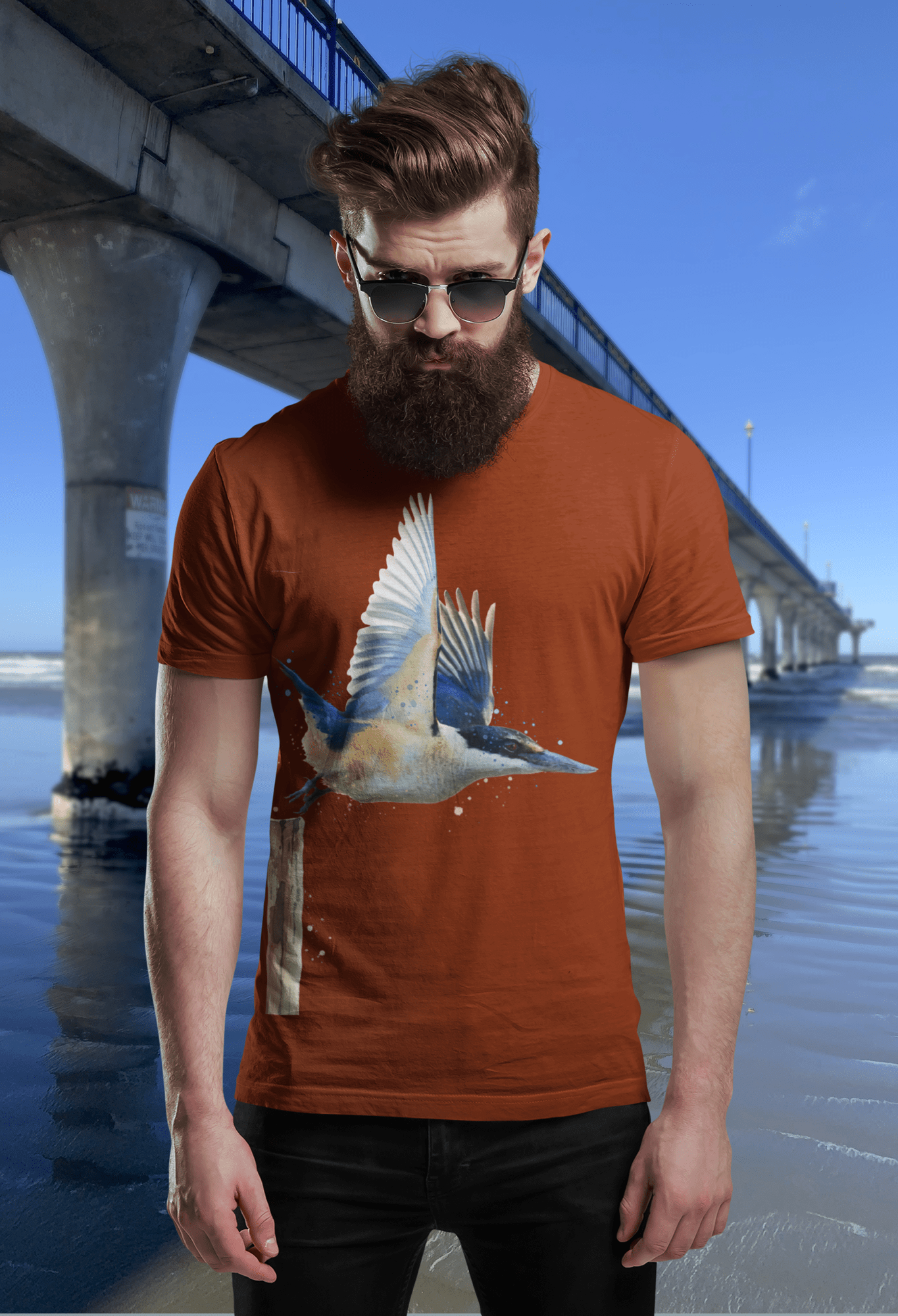
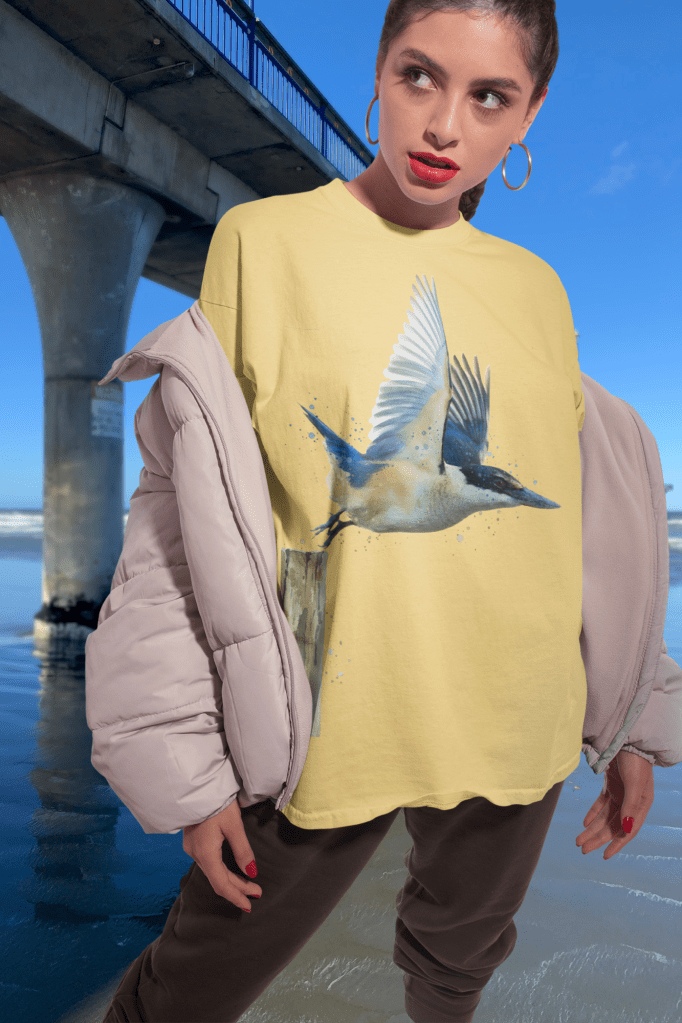
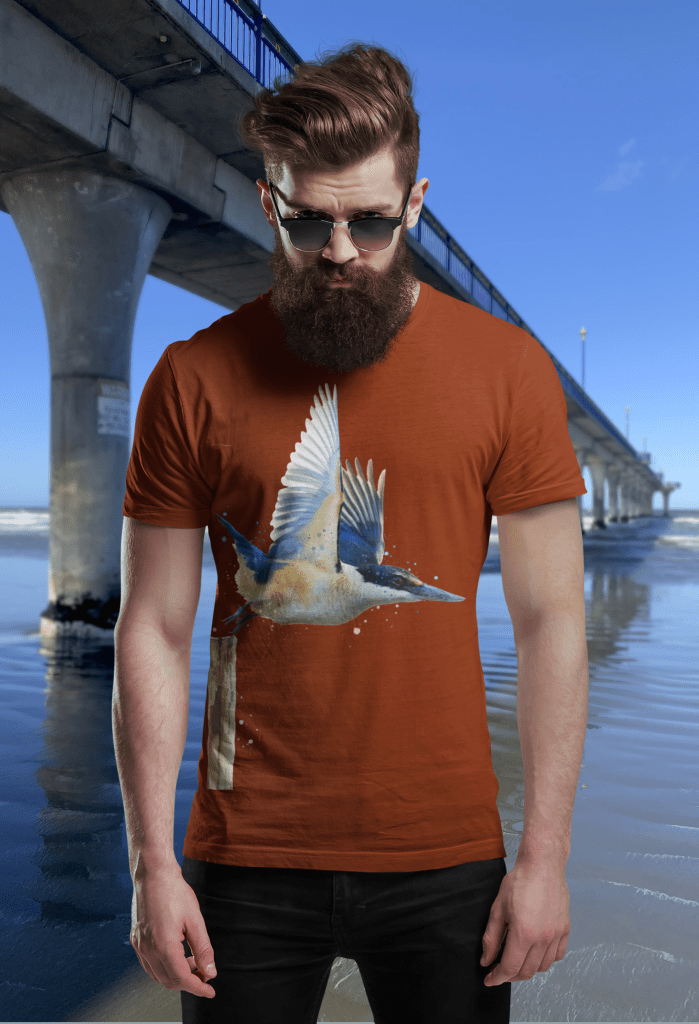
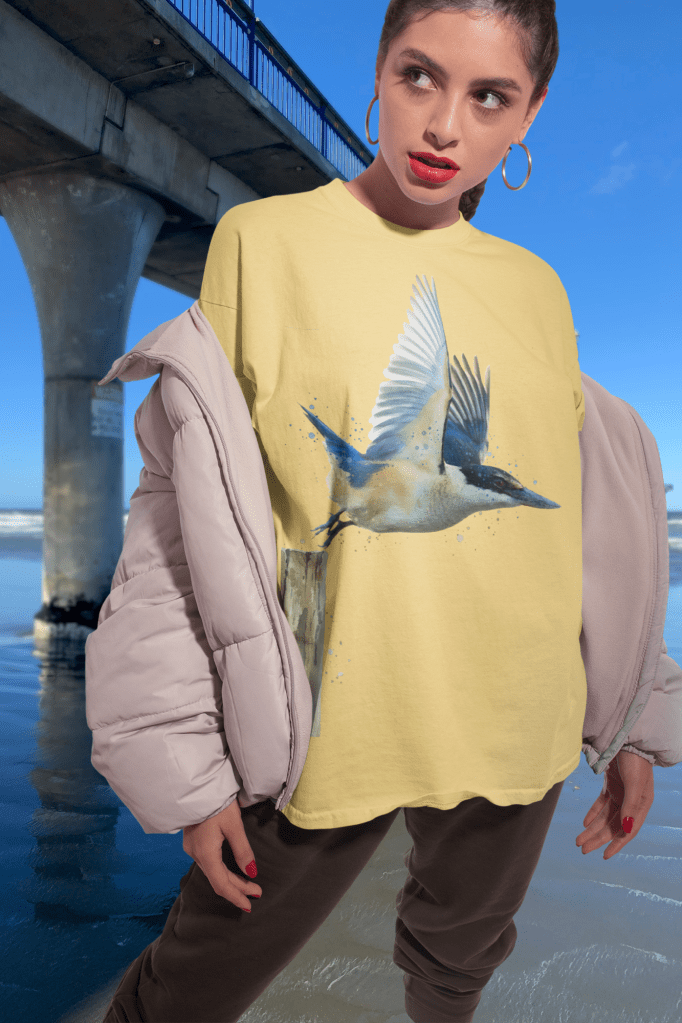
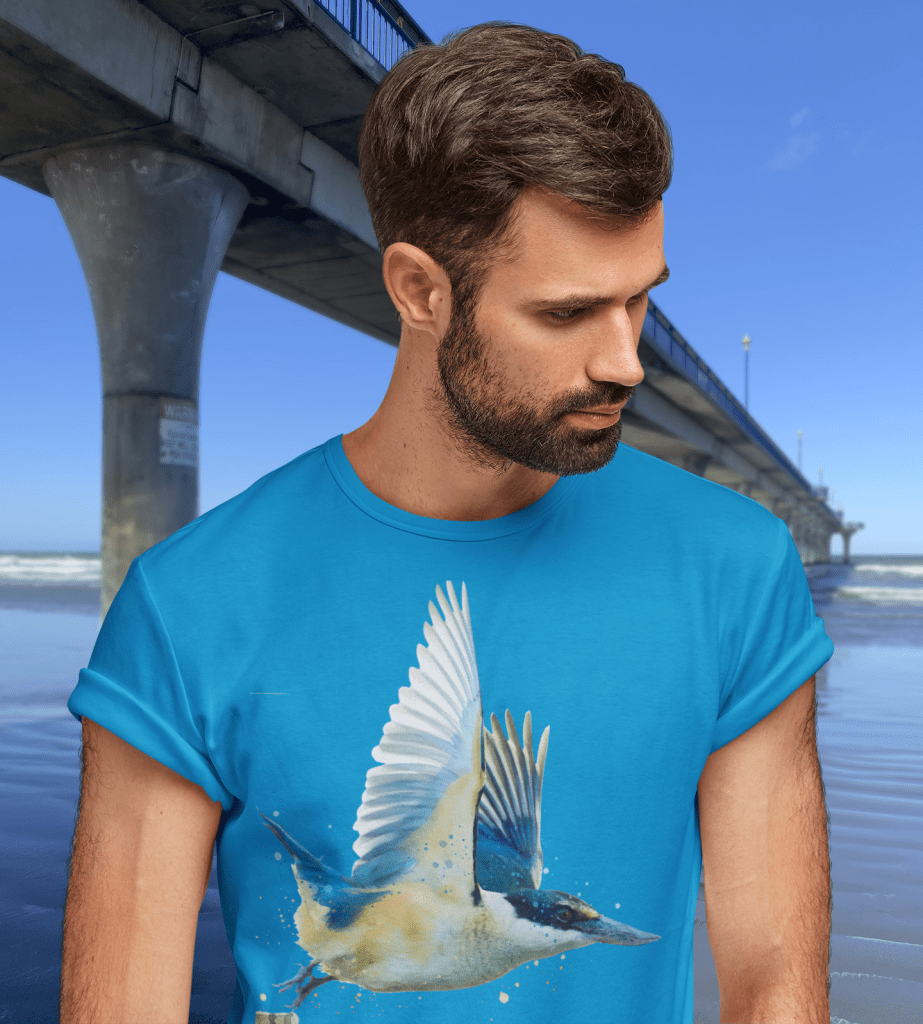
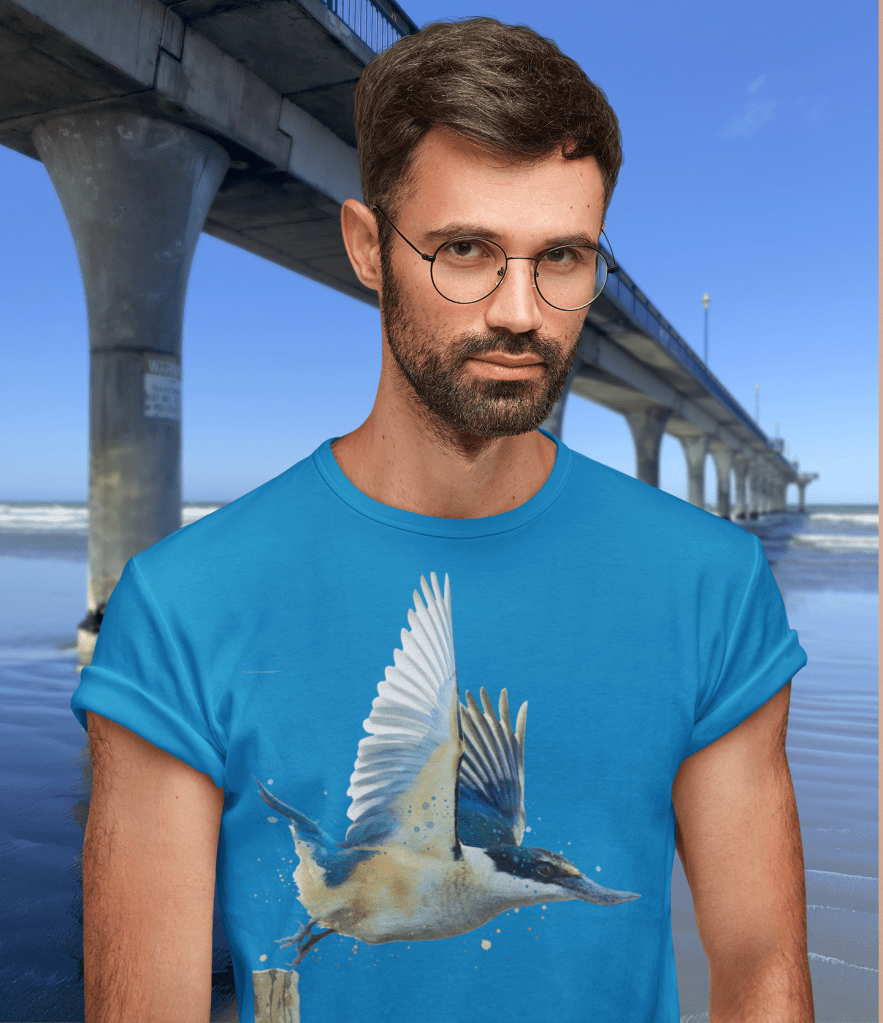
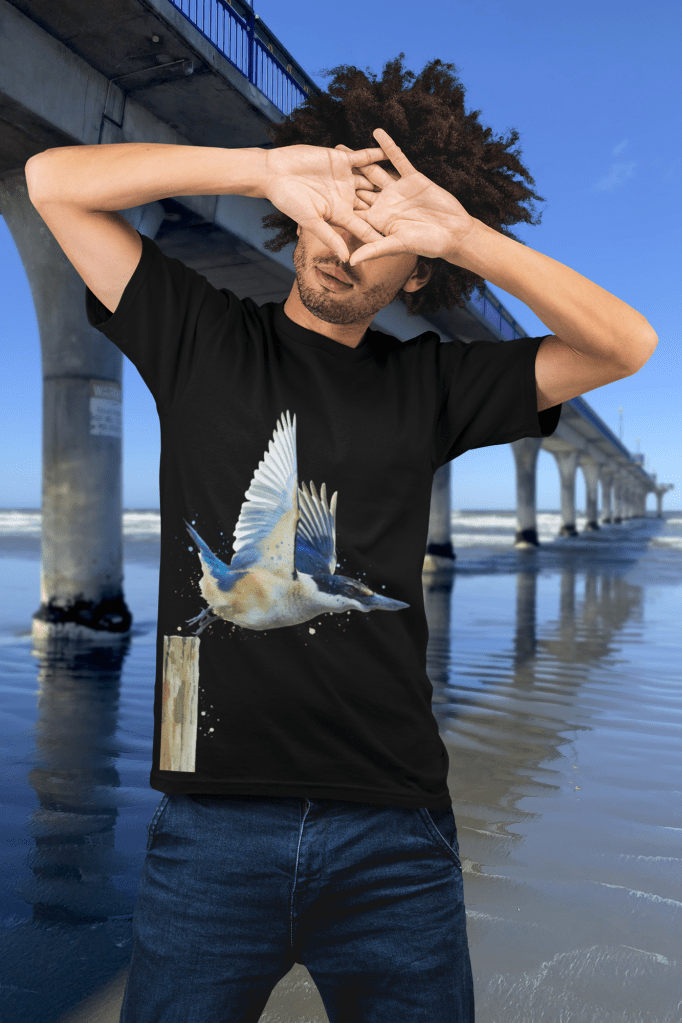
This is ‘Kingfisher Rising’, my new digital watercolour painting of the kotare exploding into the air off his perch to fish in the Avon estuary. The latest of my native birds, available on pure cotton tees in colours tuned to the kotare’s plumage. www.magentadotbrands.com/shop/
‘Kingfisher Rising’, is my new digital watercolour painting of the kotare exploding into the air off his perch to fish from the Estuary.Clay/Copper T-shirt.Classic Black T-shirt.Coastal Blue T-shirt.Soft Coastal Yellow T-shirt.Coastal Blue T-shirt.
That flash of electric blue lifting off an old wooden post is always inspiring down on the South Brighton estuary walk. I love how the digital watercolour painting wraps around the side so half of the post continues onto the back.
Kingfisher fans, by popular demand—this one’s for you! That heart-stopping moment when they explode into the air… now wearable.
Available now on pure cotton tees in four coastal colours tuned to show off the kingfisher’s plumage! https://magentadotbrands.com/shop/
Kingfisher Rising on a rust colour t-shirt.Kingfisher Rising on a tan colour t-shirt.Kingfisher Rising on an aqua colour t-shirt.Kingfisher Rising on an aqua colour t-shirt.Kingfisher Rising on a black t-shirt.
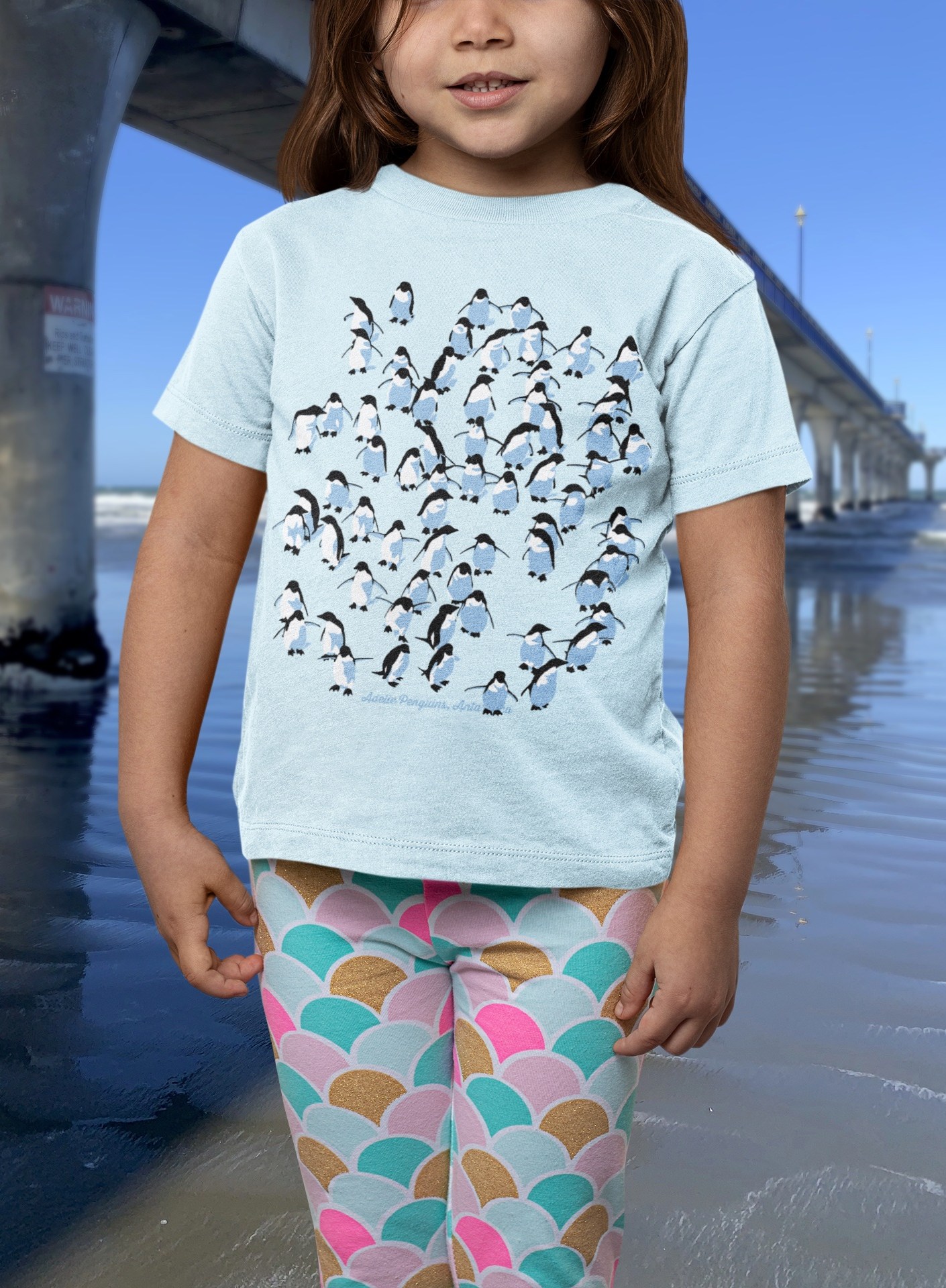
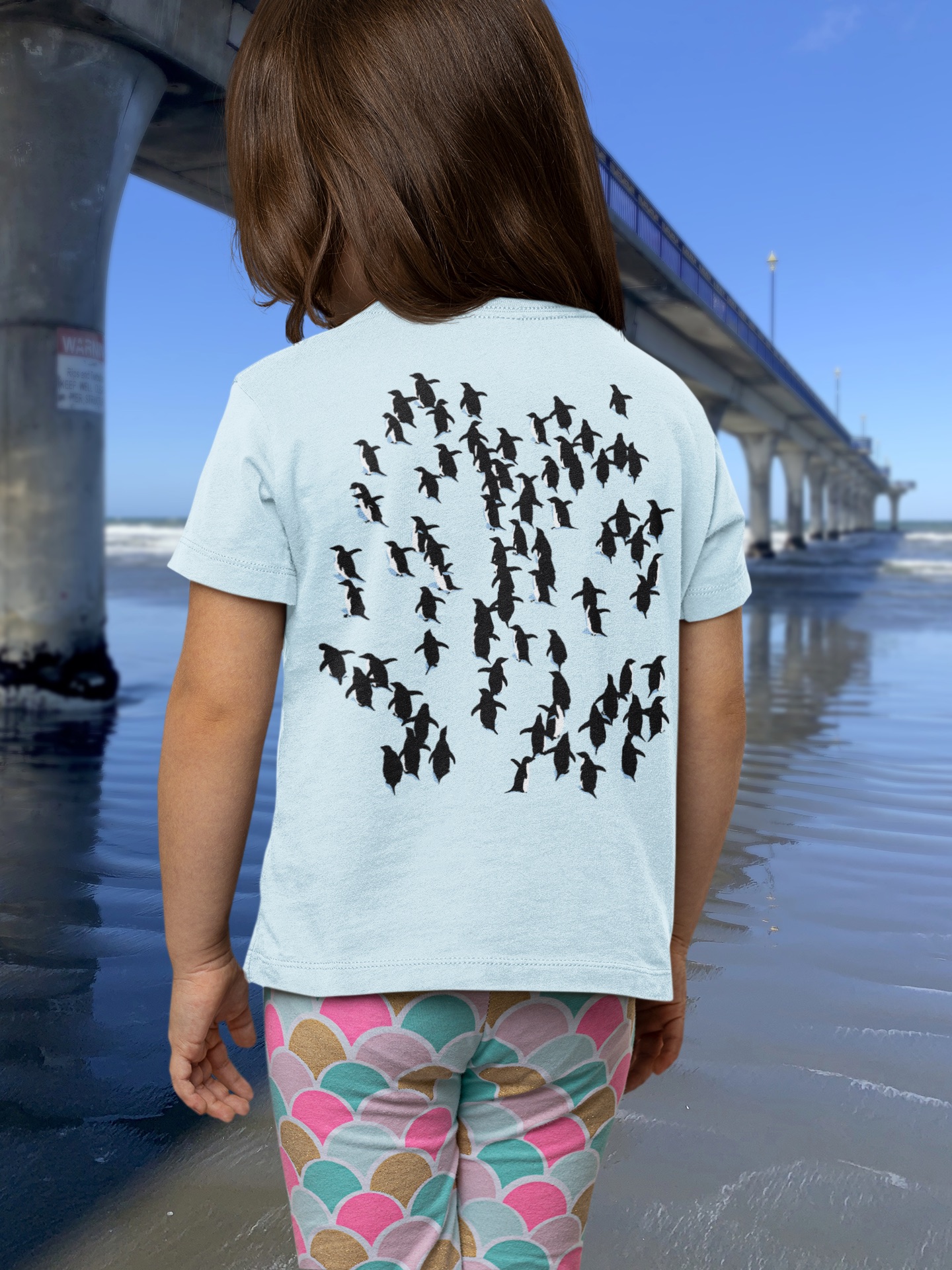
Let your little explorer waddle into fun with this all-over Adelie Penguins t-shirt! The front shows a group of cheeky penguins marching toward the Ross Sea. Meanwhile, the back reveals their hilarious retreat from a sneaky leopard seal lurking on the Antarctic sea ice. Crafted on a white, snow marle, or pale blue t-shirt, to mimic the icy Antarctic landscape, and so that the black, white, and blue design pops with a 3D effect. The perfect tee for kids who love wildlife tales. Celebrate New Zealand’s nature-inspired artwear and grab yours today.
Shop Your Way: Locally Printed in Christchurch or Online
Choose how to get your kids’ Adelie Penguins t-shirt:
Run, penguins, run! The back of this pale blue Adelie Penguin t-shirt, modeled at New Brighton Pier, brings Antarctic drama to life with a clever three-colour design.
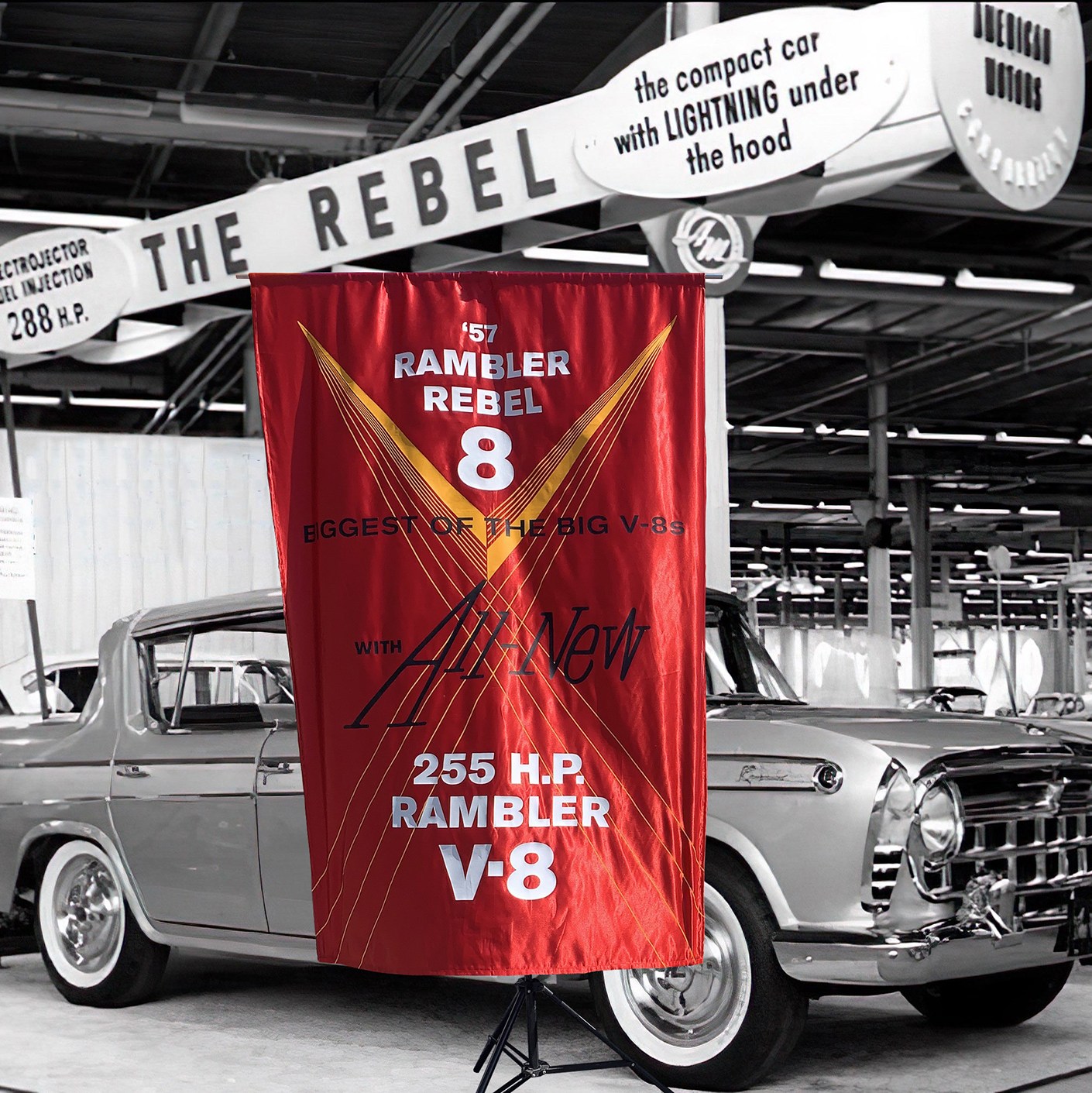
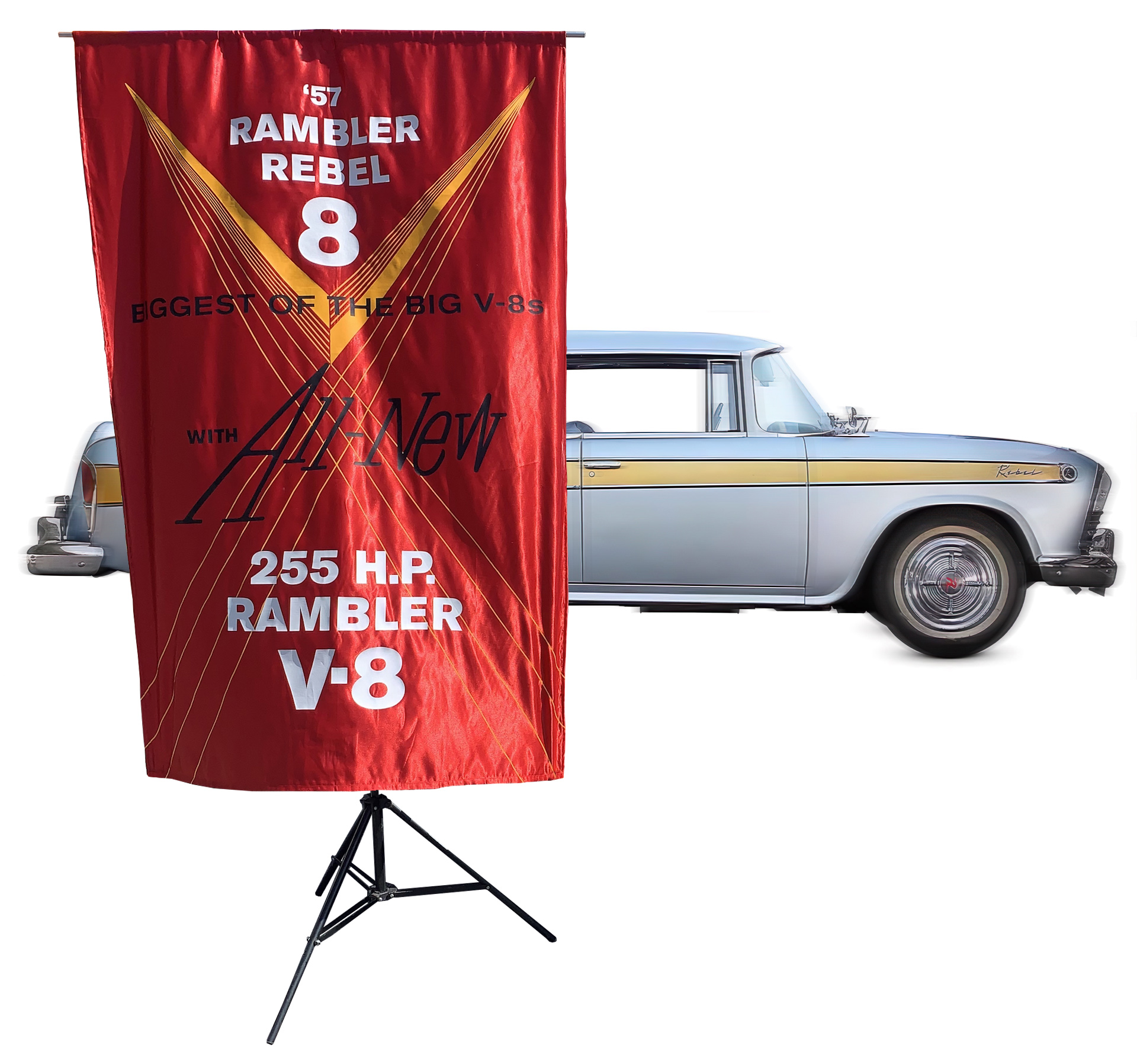
When I was deep into the process of re-creating a 1957 American Motors dealership banner for my friend’s Rambler Rebel restoration, I found myself intrigued by the car’s oddball charm. Its rarity fascinated me. My friend had showed me the 1957 Rambler Rebel in his workshop, which he’s been pouring his heart into restoring, it was in its bare metal current state. Its unibody design was clearly visible and surprising, I didn’t know that any cars were made by American Automakers in the 1950s where the body structure itself provides the main strength.
Curious to understand how this innovation came about, I dove into research. I uncovered fascinating details about the car’s legacy. Monocoque construction contributed to its lightweight agility and record-breaking 0-60 time of 7.5 seconds in 1957 at the Daytona Beach Speed Week. The research also yielded low-resolution images of the car speeding along the test track, and still images of it at Daytona Beach Speed Week.
It occurred to me that the bold graphic design of the banner, with its vintage fonts and striking colours, would look great on a t-shirt. This would be especially true if I paired it with a digital illustration of the Rebel in motion on the track.
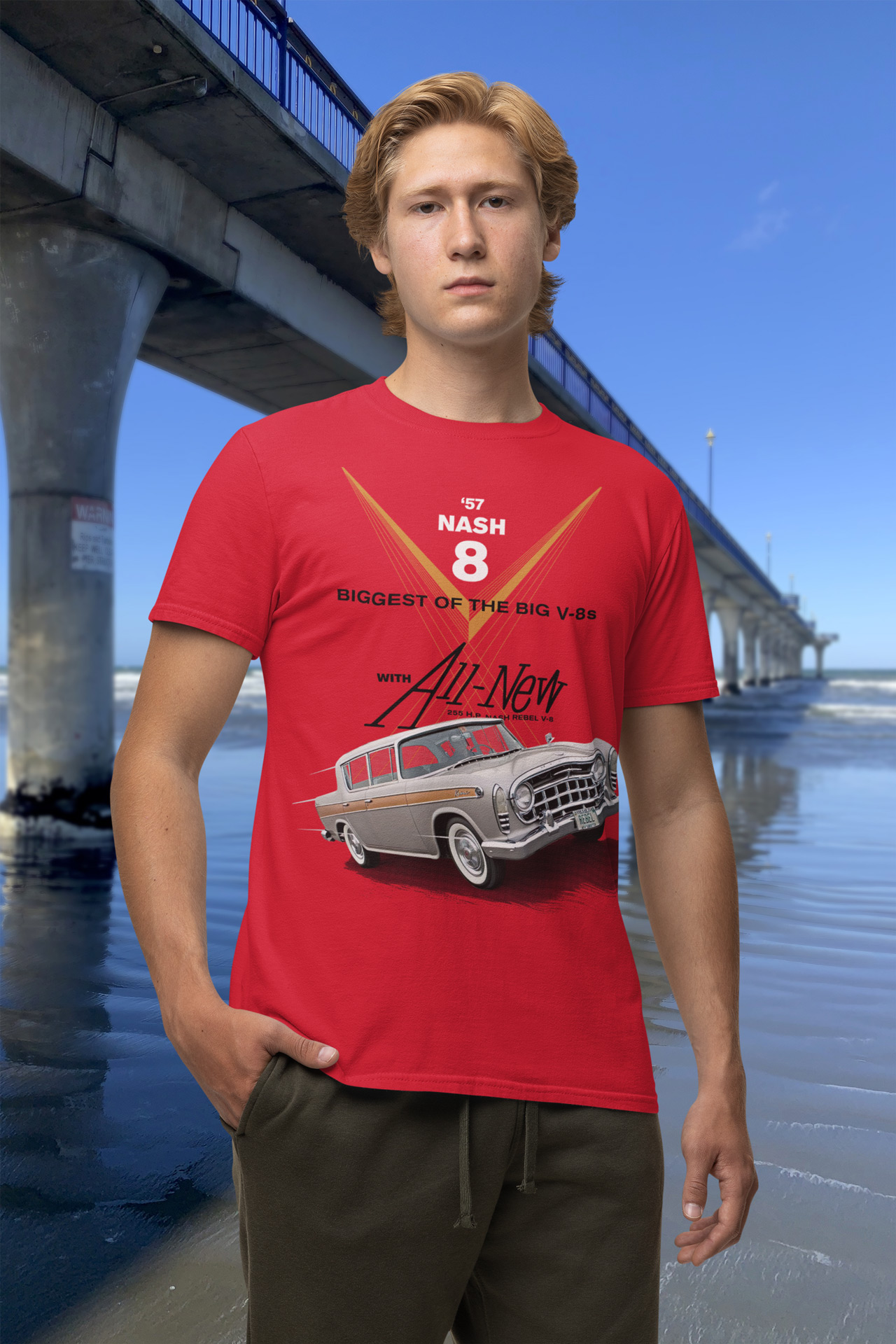
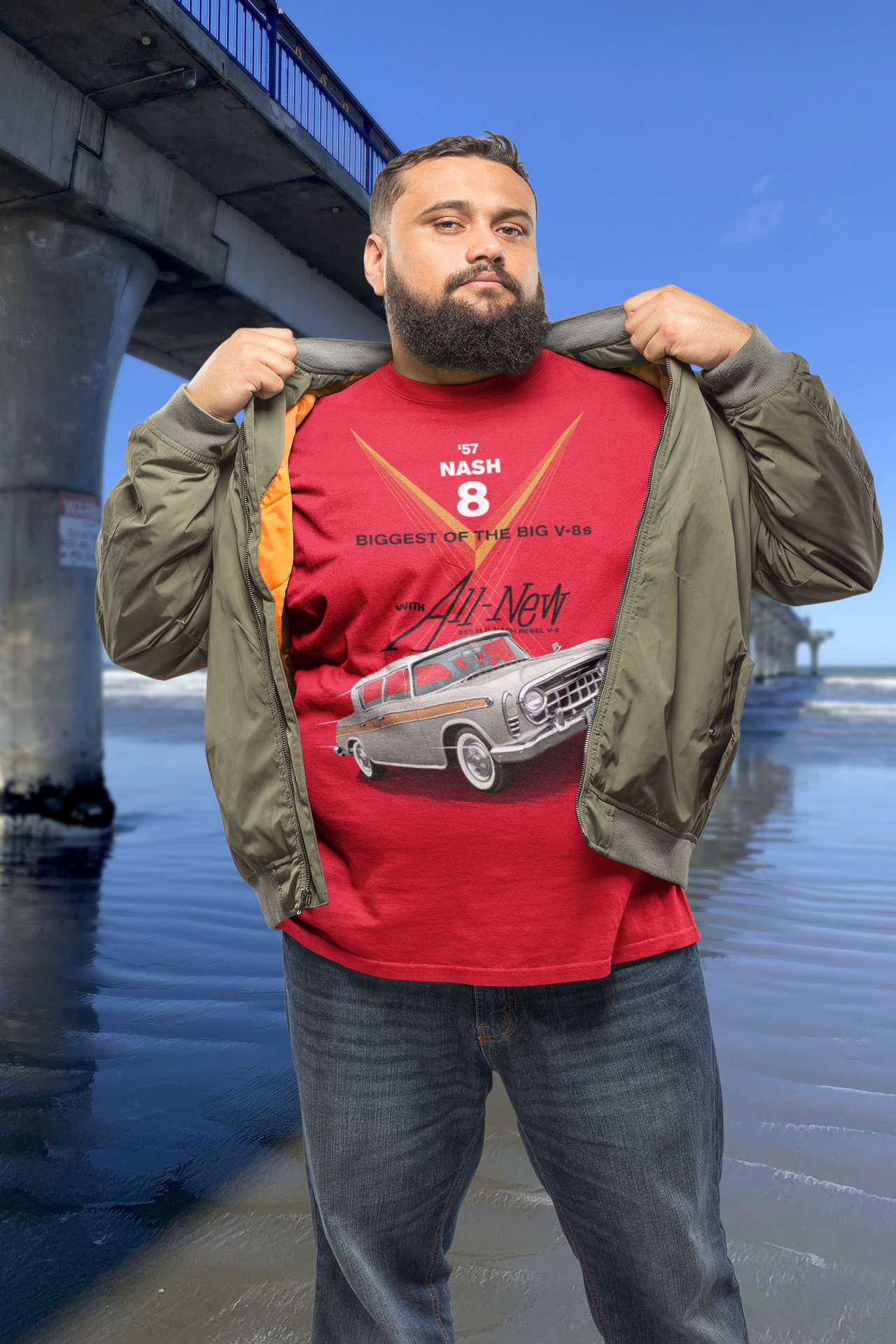
Rocking the rebel vibe at New Brighton Pier! This red 1957 Rambler t-shirt honours my friend’s restoration of the iconic Rambler Rebel—a bold nod to its underdog spirit!
Picture this: it’s 1957, and the American automotive landscape is a parade of chrome and tail fins—cars flexing their excess like peacocks in Detroit showrooms. Then, rolling out of the chaos, comes the 1957 Rambler Rebel. Not a conformist, not a follower, but a four-door rebel with a metallic silver streak and a secret under the hood. My friend, a car nut with grease under his nails and a gleam in his eye, is restoring one of these rare beauties right now. And me? I’m the design guy who got roped into re-creating an American Motors dealership banner from that very year—a bold, period-perfect piece to match his labour of love.
But why go to all this trouble for a car most folks don’t know they’ve forgotten?
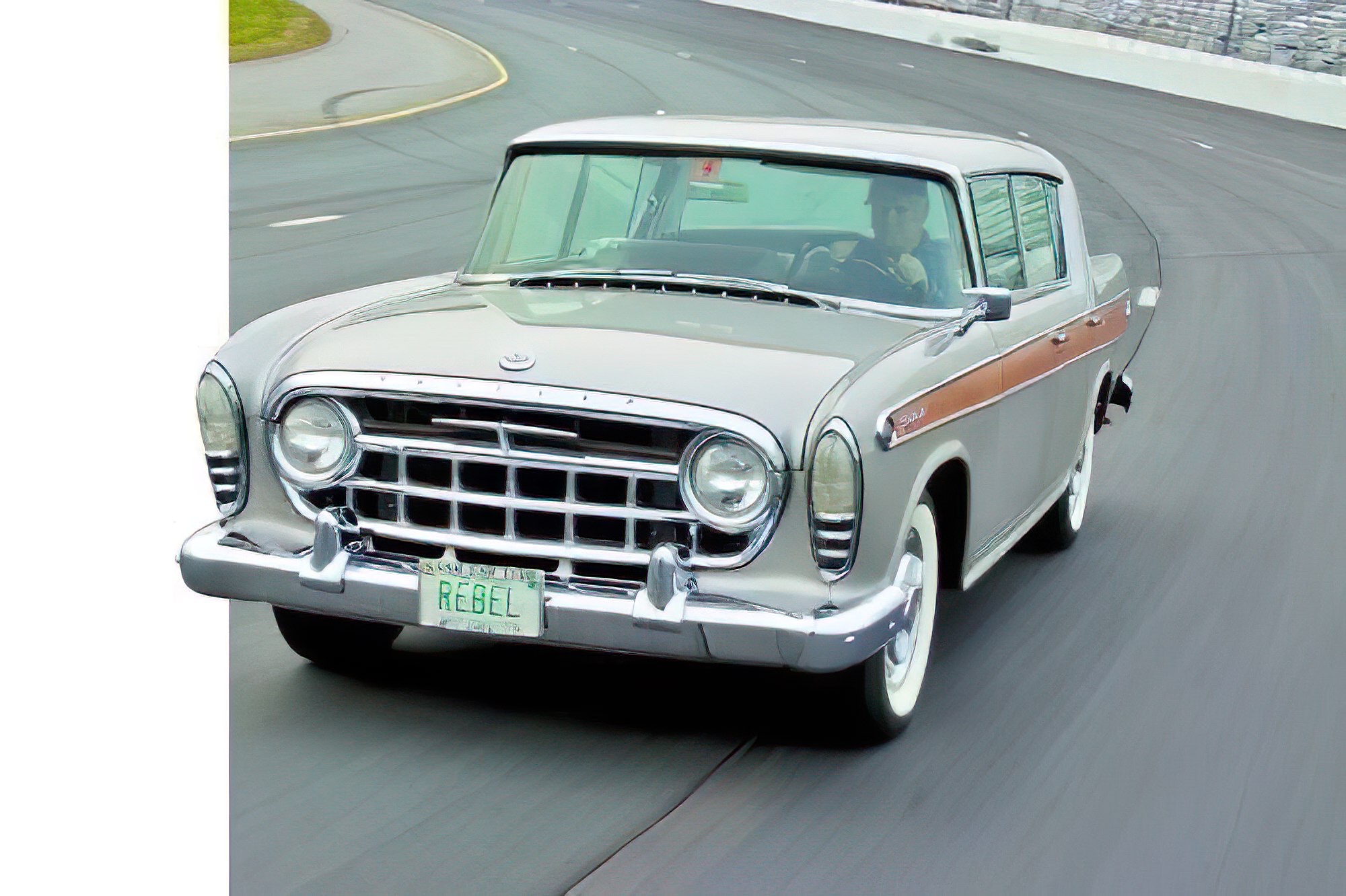
Revving into history! This 1957 Rambler Rebel sedan tears up the test track, proving its muscle car credentials with style and grit—America’s forgotten badass in action!
Let me tell you a story about the Rebel that explains it all.
Speeding into the spotlight! This photocomposite pairs a motion-blurred 1957 Rambler Rebel with its stunning red silk banner, reborn to honour a rebel with a cause!
The project: Re-Create an American Motors Classic American Car Dealership Banner from the 60s.
The Allure of a 1960s Car Dealer Banner
There’s an undeniable allure to an authentic car dealer banner from the 1960s, a cherished relic that transports us back to an era when automotive culture was as much about bold design statements as it was about engineering prowess and value for money.
A Symbol of Post-War Ingenuity
This 1960s Rambler banner, with its vibrantly patriotic red, white, and blue hues, served as proud beacons of post-war American ingenuity.
Drawing Crowds at the Swap Meet
This banner in association with the car drew enthusiasts and casual onlookers alike to the owners’ stall at the 2024 McLeans Island swap meet.
Handcrafted Authenticity
Handcrafted with care, they embodied a tactile authenticity—lustrous, pearly white polyester satin and solid cut vinyl colour printing re-creating the era’s optimism and craftsmanship.
Preserving a Legacy
Recreating such a piece, as my spouse and I did with the 1965 Rambler banner, preserves not just a design but a story, infusing it with durability for modern display while honouring its historical mid-century modern roots.
A Celebration of Nostalgia
It’s a celebration of nostalgia, a functional art piece that elevates any classic car showcase with its vivid presence and timeless appeal.
Driven by Design: Celebrating the 1965 Countryman with Mad Men-Era Panache
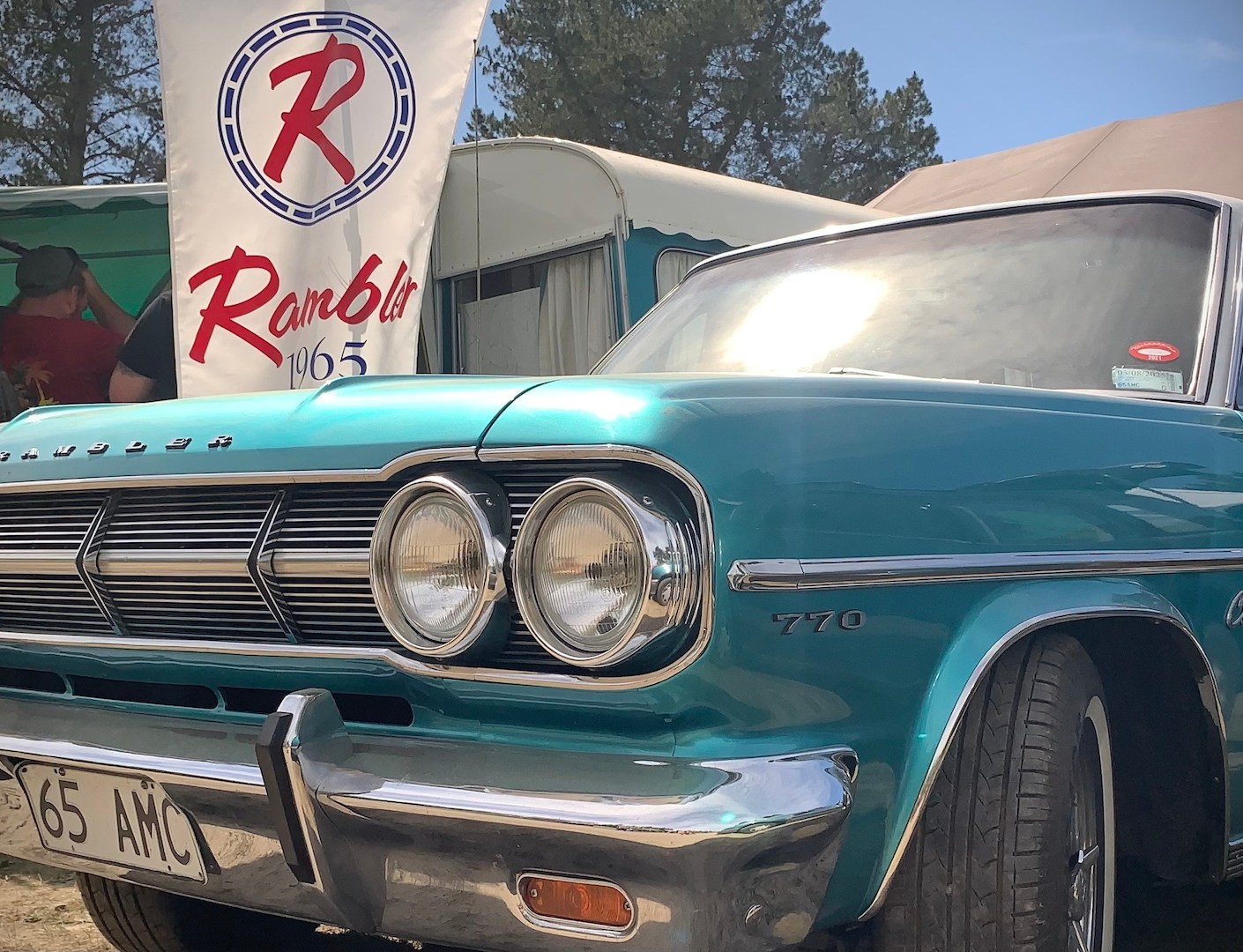
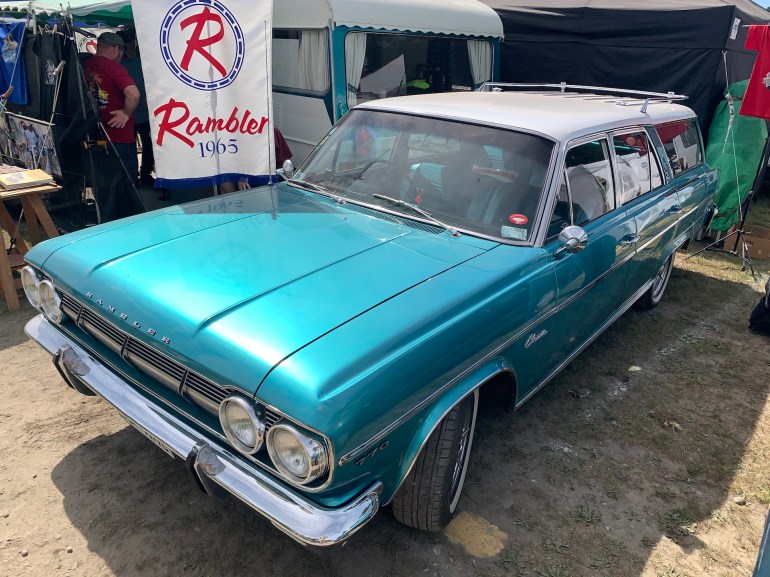
Behold the stunning 1965 Rambler Classic 770 Crosscountry, paired with our handcrafted 1965 Rambler dealer banner, shining at last year’s McLeans Island swap meet—a perfect blend of vintage design and modern craftsmanship.
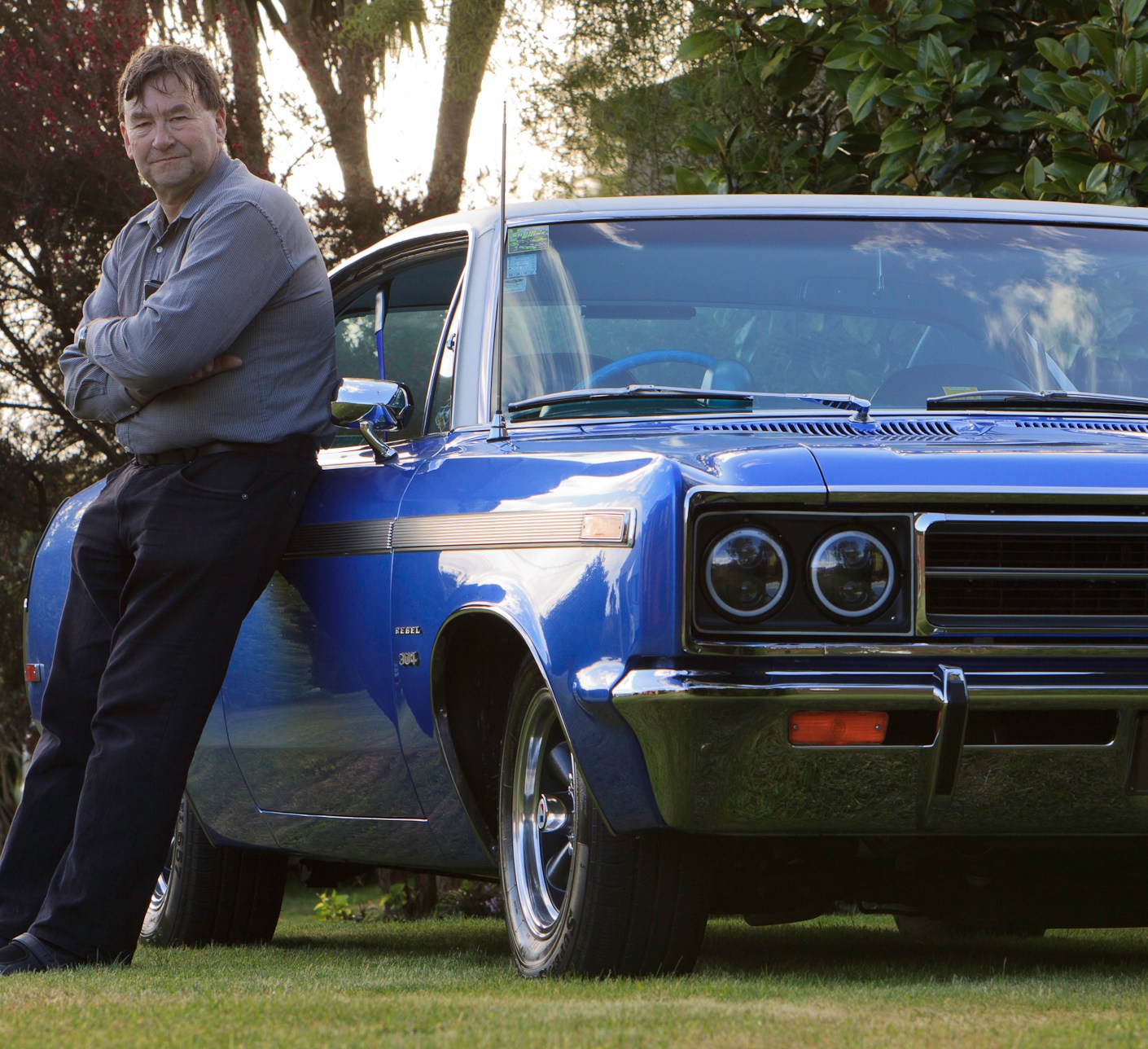
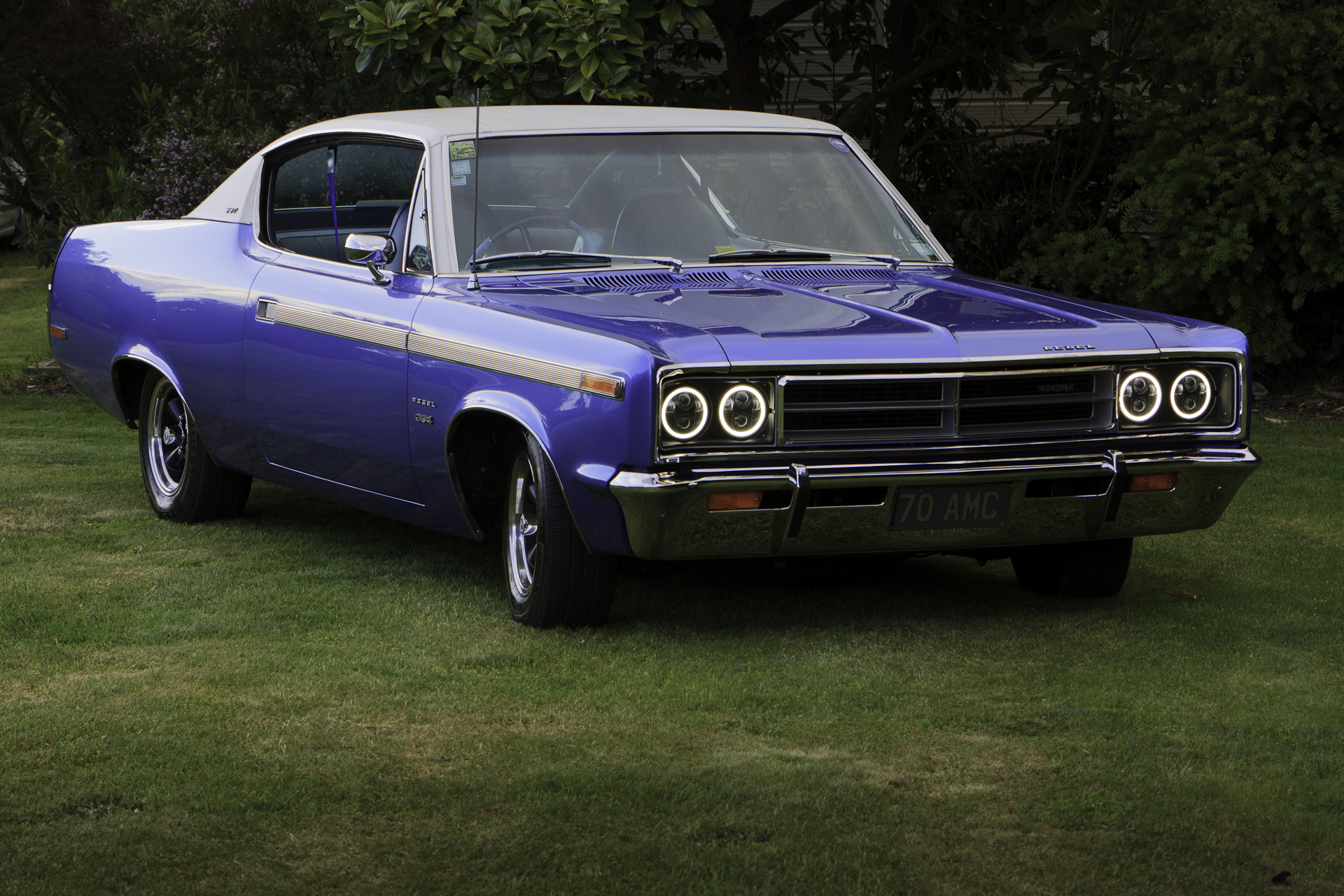
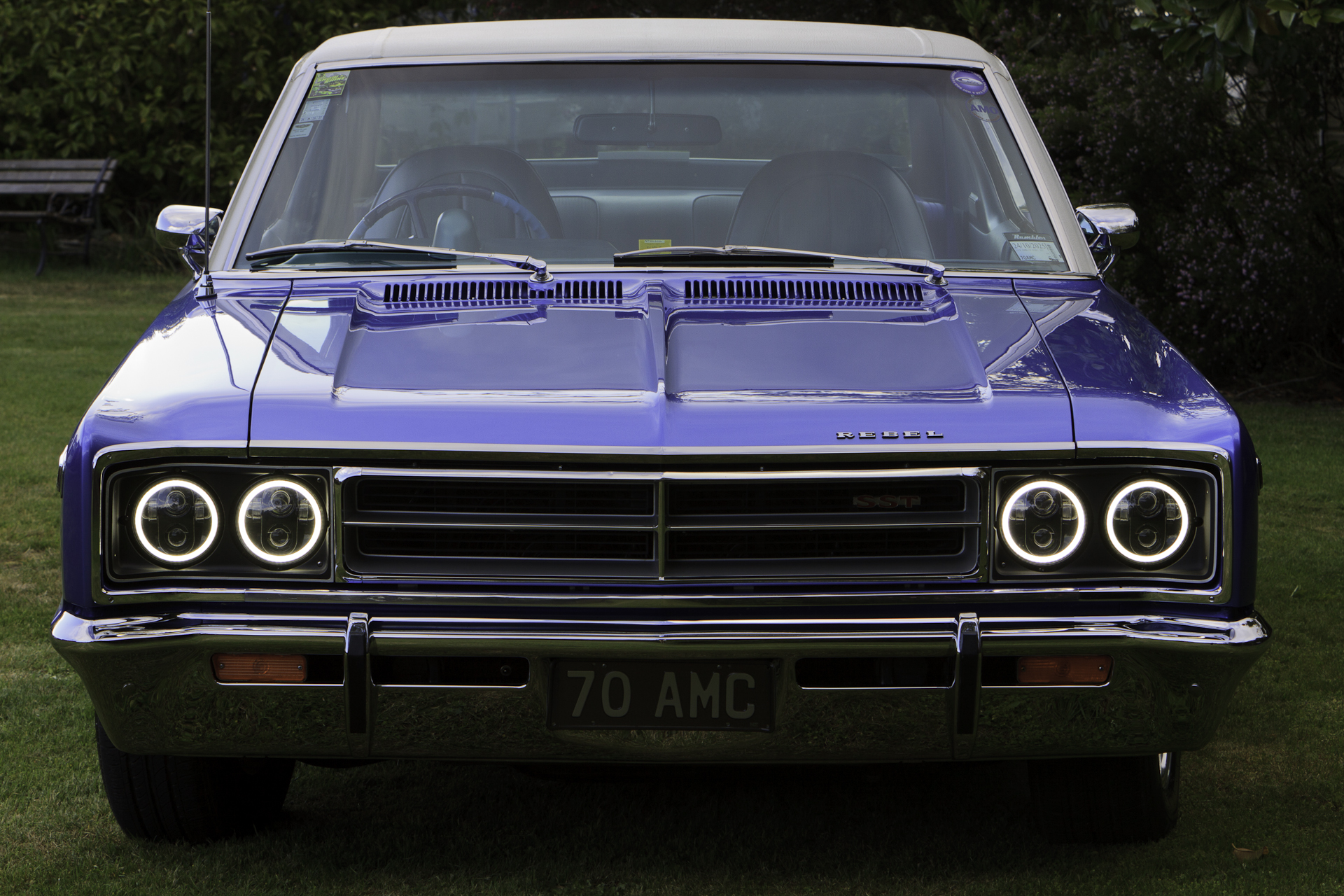
For Lindsay McKenzie, the pursuit of owning a 1970 Rambler Rebel SST Coupe was not just a whim but a decades-long odyssey. The Rebel SST, revered among American muscle car enthusiasts, is celebrated for its unique blend of style, performance, and rarity. With its 304 V8 engine, the Rebel offers a potent mix of power and character, encapsulated in a design that stands out even among its contemporaries. Its right-hand drive configuration, a special feature for this particular model built in Kenosha, USA, adds a layer of exclusivity, making it a prized possession in the classic car community.
Classic Beauty: The front profile of the 1970 Rambler Rebel SST, where mid-century classic charm meets modern restoration.
McKenzie’s story begins in 1983, under the dim lights of a Friday night in Timaru, where a dark blue Rebel SST with a “For Sale” sign caught his eye. The car, with its vinyl roof and black interior, was in surprisingly tidy condition for its age. However, the absence of contact details meant McKenzie had to return later, only to find the car had vanished by Sunday. What followed was years of inquiries and searches, all in vain, until the car seemed more like a ghost than a tangible goal.
Revived Royalty: The 1970 Rambler Rebel SST, as fast as she is pretty reborn in royal blue, narrates a tale of passion and precision. A testament to the enduring allure of American muscle cars.
Living in a small New Zealand country town, my friend and client, a Freezing Worker with a passion for restoring classic American muscle cars, especially those from American Motors, approached me with a unique commission. His project was to immortalise his cherished 1970 Rambler Rebel SST on apparel, inspired by an advertisement from the April 1970 issue of New Zealand’s Reader’s Digest.
Concept Development
The brief was clear—to recreate the black and white ad of the Rambler Rebel SST in colour, but with a modern twist suitable for today’s fashion. The first step was understanding the nostalgia and the essence of the car’s era. The brief to maintain the advertisement’s simplicity yet enhance it with a contemporary touch to resonate with both car enthusiasts and fashion aficionados.
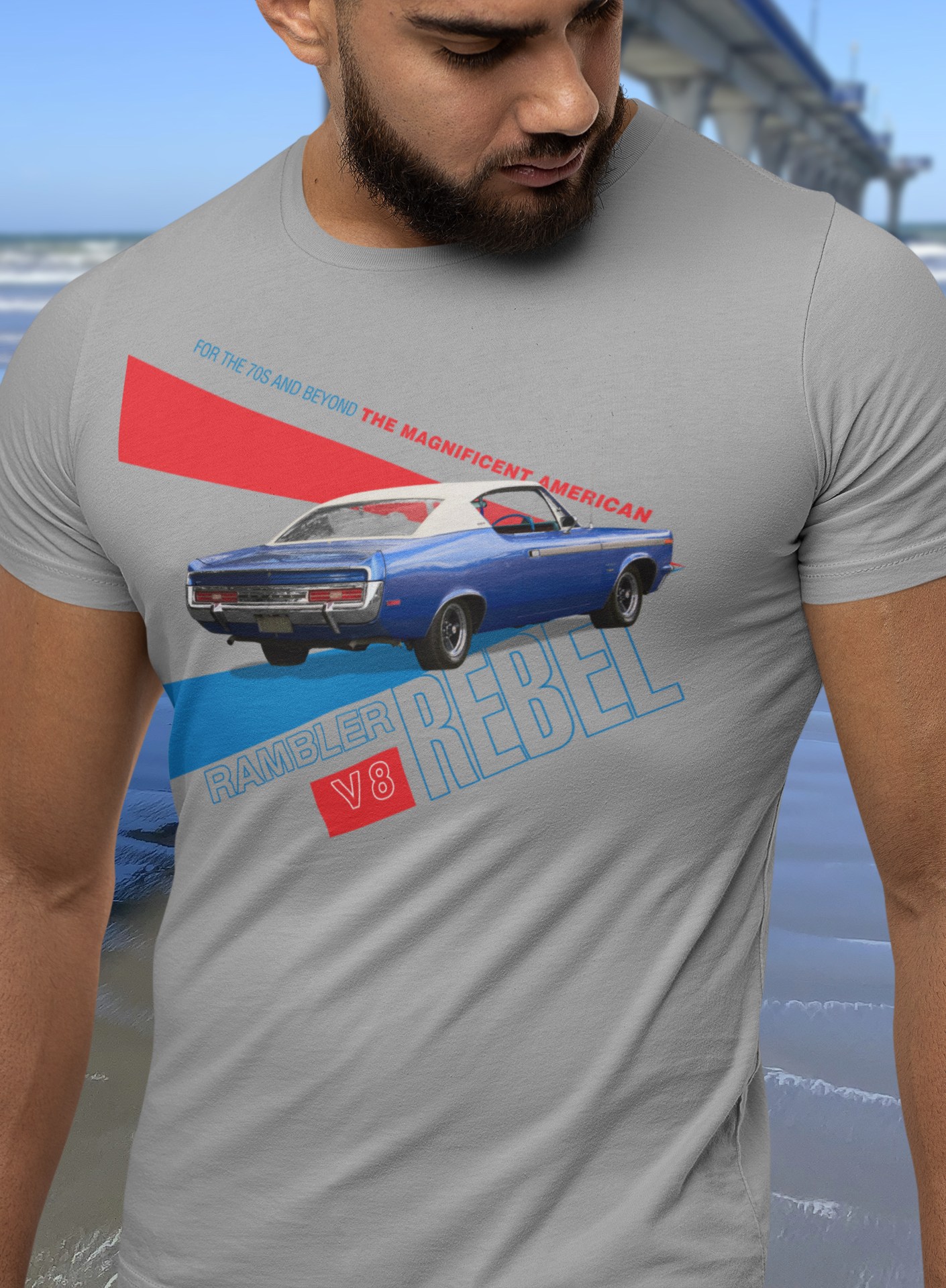
The 1970 Rebel SST, one of the coolest muscle cars to come out of AMC… she’s as fast as she is pretty, and looks great on a grey marle t-shirt.
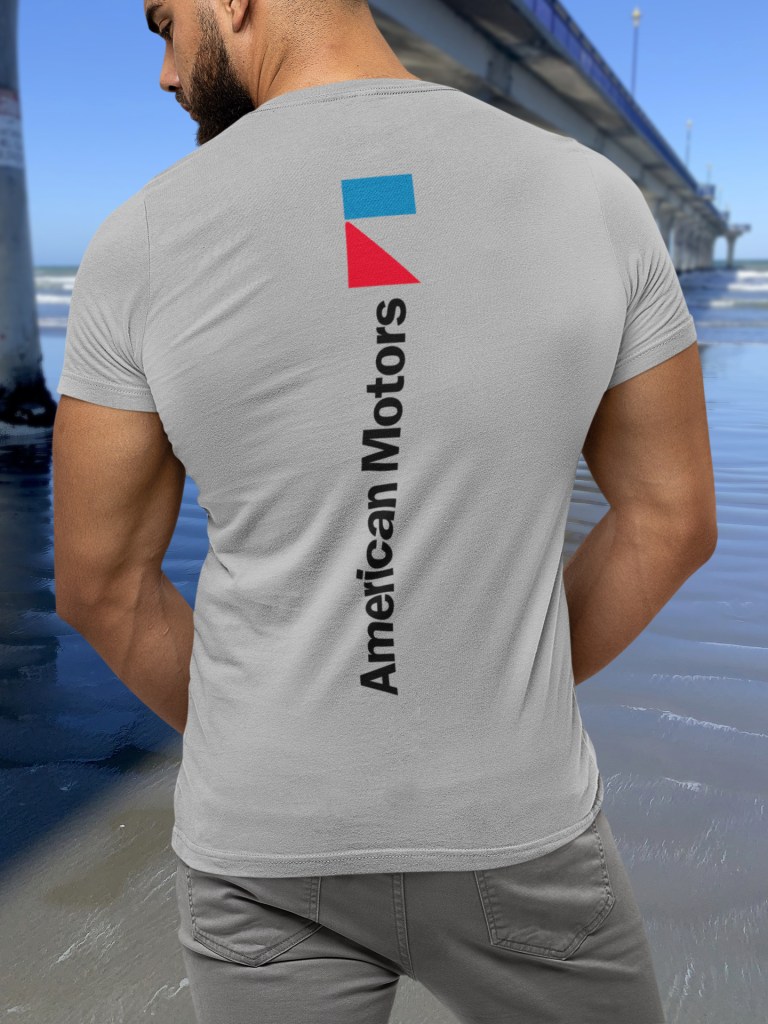
Reviving the spirit of 70s American muscle on New Zealand shores. This custom print of the 1970 Rambler Rebel SST, complete with the iconic American Motors logo, is captured beside the robust New Brighton Pier. If this pier were a freeway, it would take you all the way to Chile’s west coast!
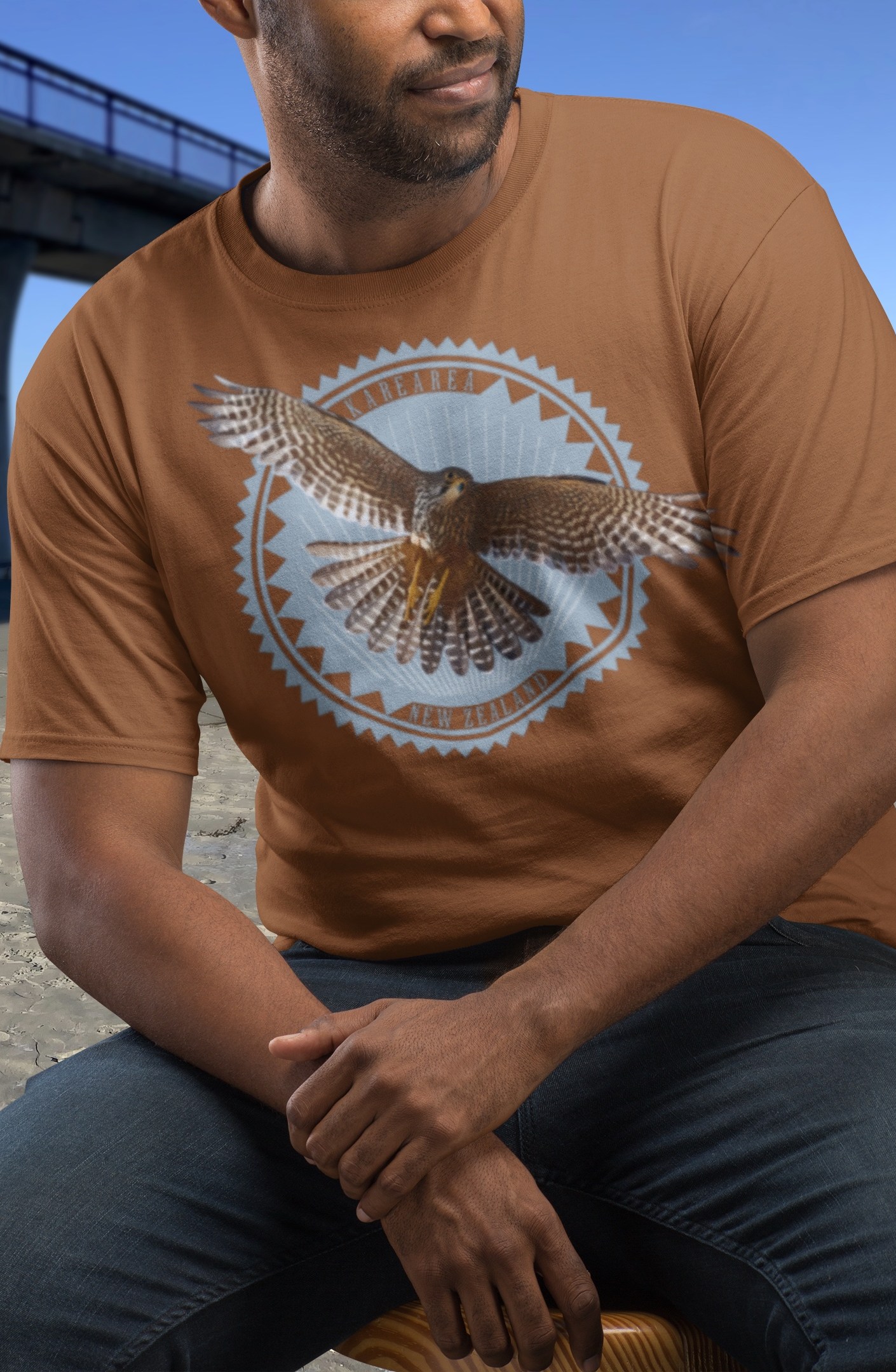
I’m thrilled to unveil my latest wildlife artwork. It is a t-shirt that captures the majestic flight of the Karearea. This is New Zealand’a species of native falcon.
The karearea, or the New Zealand falcon, (Falco novaeseelandiae, also known as the sparrow hawk) holds significant ecological and cultural importance in New Zealand. It is the only endemic bird of prey left. This fierce predator symbolises the resilience of native wildlife, offering a powerful representation of the country‘s bird life. Interestingly, it is most closely related to the Aplomado falcon of South America. The karearea might resemble the Australasian swamp harrier or Kahu and occupy a similar ecological niche. However, these two bird species are not closely related. This highlights the karearea’s unique evolutionary path and its critical role as an apex predator.
Check out the karearea design in action in our new YouTube Shorts video:
New karearea soaring across the chest of a t-shirt.Read More
The inspiration for the design came from superlative wildlife photographer Rod Morris. Chrissie and I visited Rod’s image library in Dunedin back in the 90s when we were there exhibiting with The Great New Zealand Craft Shows. We were looking for slides that he had cherry-picked. These slides had the potential to be developed into hand-separated wildlife art for screen printing.
Making It Simple: Breaking Down the Colours to Just Seven Stencils for the Original Screen Print
The Art of Art for Reproduction: Rediscovering the Charm of Hand-Separated Rendering for Screen Printing
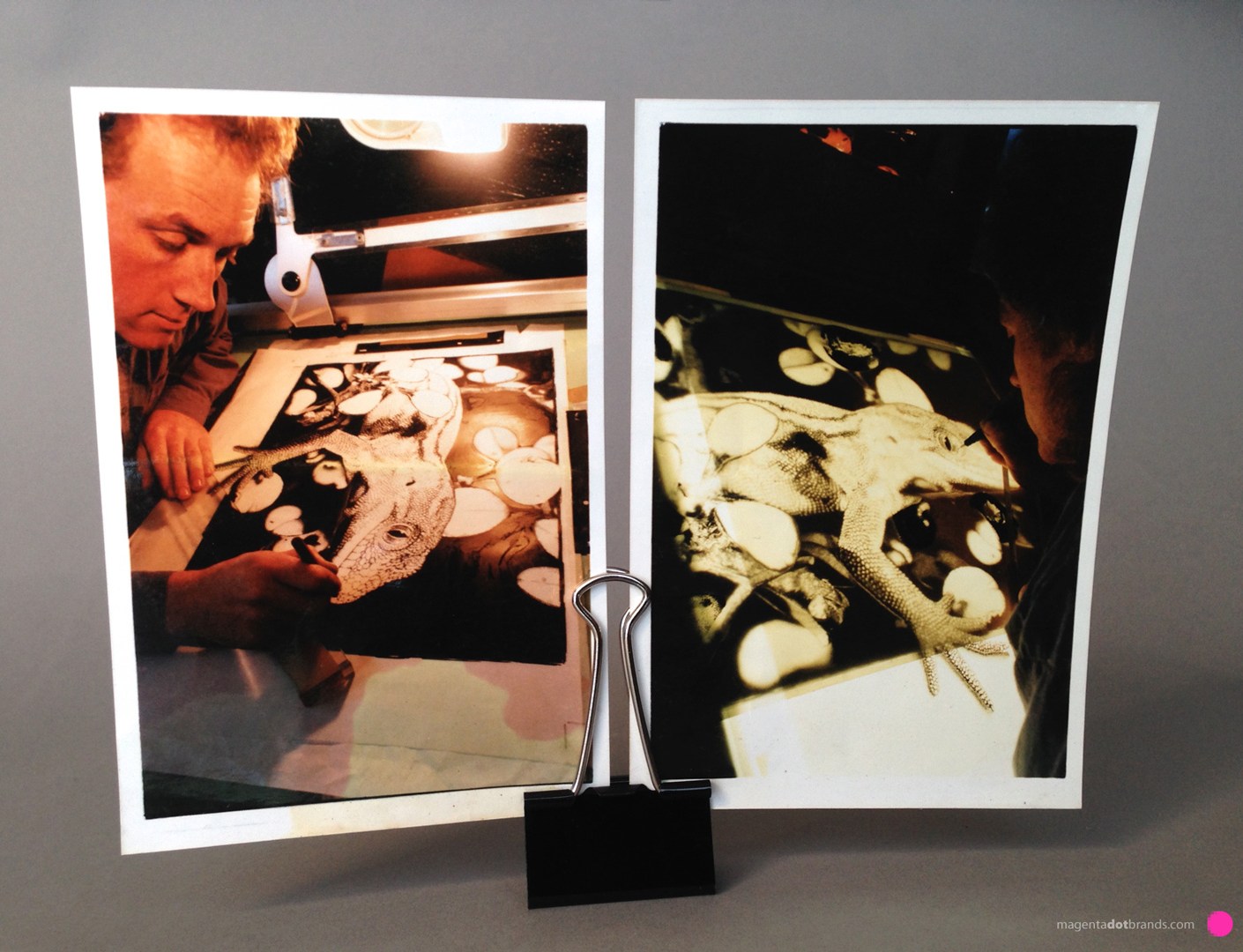
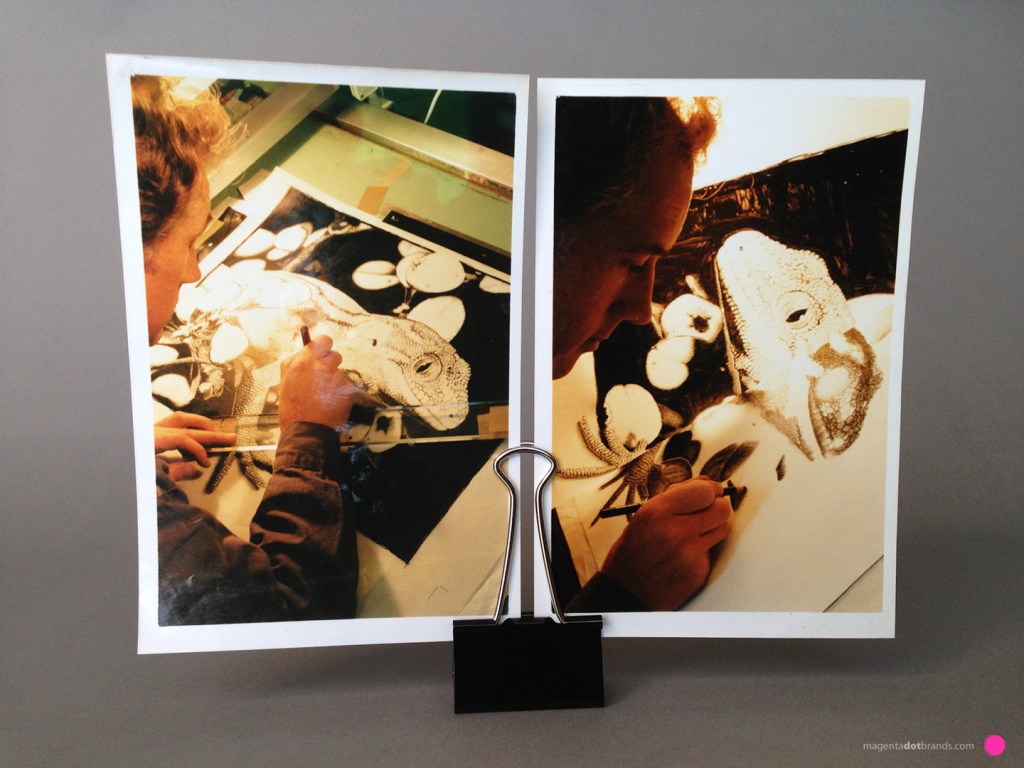
In the modern world of digital design, where every line can be perfected with a click, there’s something uniquely captivating about the traditional methods of graphic design. Today, I want to take you back to the early ‘80s, to the Graphic Design School at Auckland Technical Institute, where I spent over four years mastering an art form that’s as meticulous as it is magical—hand-separating colours for screen printing. Rendering shading, texture, and detail to achieve a realistic depiction of New Zealand native animals and plants.
Rendering method. This process is performed using a lightbox where light shines through the reference highlighting the areas to be drawn in a careful pointillist transcription method with a 0.35 mm Rotring pen onto Mylar film or delicate charcoal pencil shading onto textured coquille board. Read More







 MagentaDot Brands